An Old Friend's Help: France, America, and 250 Years of Friendship
Of all the foreign nations woven into the American story, none looms larger over the founding itself than France. Without French ships, French muskets, French gold, and French blood spilled on American soil, there is a real possibility the Revolution simply fails. This month's France page looks back at that debt, the famous statue France later sent to commemorate it, and forward to the cycling spectacle France sends the world every July.
The material support that followed was not symbolic. Over the course of the war, France contributed roughly 12,000 soldiers and 32,000 sailors to the American cause, along with the weapons, uniforms, and loans that kept the chronically underfunded Continental Army in the field. The Marquis de Lafayette, only nineteen years old when he arrived in 1777 against his own king's wishes, became one of George Washington's most trusted commanders and a lifelong friend. The decisive blow came at Yorktown in 1781, where roughly 10,800 French regulars under the Comte de Rochambeau and 29 French warships under the Comte de Grasse combined with Washington's forces to trap Lord Cornwallis, forcing the surrender that effectively ended the war. A foreign relations historians' survey years later would rank the 1778 alliance among the three best decisions in the entire history of American foreign policy, and it is difficult to argue otherwise: without it, the United States as a nation may simply not exist.
France's gratitude for the alliance did not end with the war. A century later, French historian and abolitionist Edouard de Laboulaye proposed a monument to commemorate the friendship between the two nations and to celebrate the American centennial, an idea that found its sculptor in Frederic Auguste Bartholdi.
Lady Liberty arrived in New York Harbor in 1885, disassembled into 350 pieces packed across 214 crates, and was dedicated by President Grover Cleveland on October 28, 1886. A plaque at her base, placed by the French government itself, declares the gift commemorates "the alliance of the two Nations in achieving the Independence of the United States of America and attests their abiding friendship" — a sentence that, 250 years after Yorktown, still says it best.
The Tour Rolls Again: Le Grande Boucle 2026
France's other great July export needs no embassy or treaty to reach American audiences: the Tour de France returns again this summer, and the 113th edition promises to be one of the more dramatic in recent memory. For the 27th time in the race's history, the Grand Depart takes place outside French soil entirely, with this year's edition launching from Barcelona, Spain on July 4 with a team time trial, before the peloton crosses into France itself on stage three and begins the long climb, literally, toward Paris.
Over 21 stages and 3,321 kilometers, riders will face climbs through the Pyrenees, the Massif Central, the Jura, the Vosges, and finally the Alps, with a punishing 54,450 meters of total elevation gain across the three-week race. The route includes two separate summit finishes atop the legendary Alpe d'Huez, a climb so demanding and so storied that simply finishing strong there has made careers. The race concludes, as it has in recent years, with a symbolic finale through the Montmartre district before the traditional sprint down the Champs-Elysees in Paris — a route that, for one afternoon every July, turns the City of Light into the most-watched finish line in cycling.
For readers who caught this month's Outdoors page on road and mountain biking, the Tour de France is the road discipline's ultimate showcase: three weeks of sustained effort, tactical team riding, and brutal mountain stages that make even a well-trained recreational cyclist wince in sympathy. Whether watching from a Tennessee living room or dreaming of someday riding a stage of the route in person, July belongs to the peloton as much as it belongs to fireworks back home.
Sources
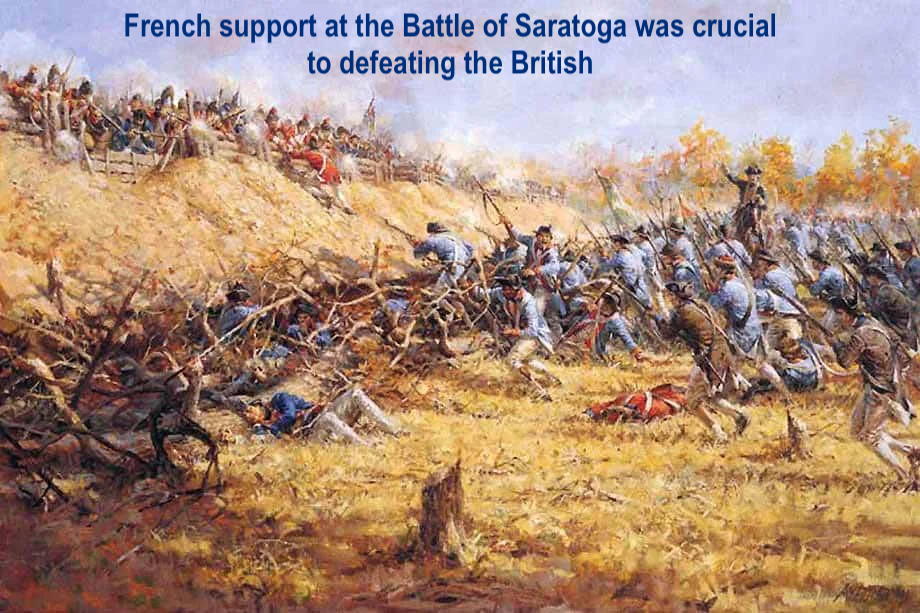 The alliance did not come easily or quickly. Throughout 1775 and 1776, France maintained official neutrality while secretly funneling munitions and loans to the rebellious colonies, wary of provoking Britain directly and equally wary of appearing to endorse a rebellion that might inspire ideas closer to home. What changed Versailles's calculus was Saratoga. The American victory there in October 1777 proved to French ministers that the colonists were not merely capable of resistance but of actually winning, and King Louis XVI's government moved quickly. On February 6, 1778, Benjamin Franklin, Silas Deane, and Arthur Lee signed both the Treaty of Amity and Commerce, formally recognizing American independence, and the Treaty of Alliance, committing France to military support. Word reached Britain in March; London declared war on France within days, and what had been, in the candid words of one historian, a lopsided colonial rebellion became a genuine world war.
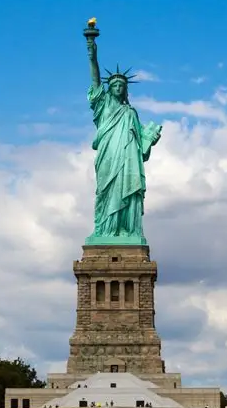 Bartholdi spent over a decade bringing the concept to life, enlisting engineer Gustave Eiffel, who would later build his famous Paris tower, to design the statue's internal iron framework. The arrangement split costs deliberately along the same lines as the original alliance: France paid for the statue itself, while America was responsible for the pedestal tpon which ir would stand.
American Battlefield Trust
National Archives
Council on Foreign Relations
History.com
Le Tour de France Official Site
|
|||
| search engine by freefind |
Your ad could be in the next issue of idleguy.com for as little as $6 per month. Contact Fearless Rick using the form on page 15 for more information.
is the official online marketplace for idleguy.com and dtmagazine.com, featuring vintage magazines and other merchandise for sale.