America's Continuous Disagreement, Part One: The State We've Built
Editor's Note: This year marks 250 years since the signing of the Declaration of Independence. To mark the occasion, this two-part feature steps back from the headlines to ask a larger question — not what America is arguing about today, but why we have been arguing, productively, since the beginning. Part One looks at the government we have actually built. Part Two, on page 6, goes back to where the disagreement started.
The Founders argued over the size and reach of government. They could not have imagined the scale of what it would become.
In 1791, the entire federal government employed a few thousand people and operated on a budget that would not cover a single afternoon of today's Department of Defense. There was no income tax, no standing federal bureaucracy to speak of, and no real expectation that Washington would involve itself in the daily lives of citizens beyond delivering the mail and defending the coastline. Alexander Hamilton looked at that skeletal arrangement and saw weakness. He wanted a national bank, federal assumption of state debts, tariffs to protect domestic manufacturing, and a government energetic enough to act decisively in a crisis. Thomas Jefferson looked at the same arrangement and saw exactly what the Revolution had been fought to protect: a republic of farmers, suspicious of concentrated power and standing armies, governed as lightly as possible from as far away as possible. Both men signed onto the same Constitution. Neither fully got his way. That tension, left unresolved by design, was in some sense the entire point of the document.
This did not happen all at once, and it did not happen by accident. Each major expansion of federal power in American history has arrived attached to a crisis, and each crisis left the government larger than it found it. The Civil War nationalized currency and conscription and created the first federal income tax, a temporary wartime measure that outlasted the war. The Progressive Era, responding to the abuses of Gilded Age monopolies, built the first modern regulatory agencies — the Interstate Commerce Commission, the Federal Trade Commission, the Food and Drug Administration. The Great Depression produced the New Deal, and with it Social Security, federal deposit insurance, and a permanent expectation that Washington would intervene when the economy failed. World War II and the Cold War that followed built the permanent military-industrial complex that Dwight Eisenhower, of all people, warned the country about on his way out of office in 1961 — a warning that did little to slow its growth in the decades since.
Each expansion answered a real and often urgent crisis. Each one also proved remarkably difficult to shrink once the crisis passed. The income tax never went away. The regulatory agencies multiplied rather than dissolved. The wartime mobilization of American industry became a permanent peacetime fixture, with defense spending remaining elevated long after the conflicts that justified it had ended. Government, once grown, rarely volunteers to get smaller — not necessarily out of bad faith, but because every program creates a constituency invested in its survival, and because dismantling existing structures is always harder, politically and practically, than building new ones.
The post-industrial economy has only sharpened the underlying question. America no longer manufactures the way it once did; it manages, finances, and serves. Automation and offshoring hollowed out the industrial middle class that the New Deal-era state was largely built to protect, replacing factory jobs with a service and information economy that produces enormous wealth at the top and considerable instability everywhere else. The safety net designed for industrial-era layoffs and old-age pensions is now asked to do something much larger and much harder: cushion an economy that no longer guarantees anyone a stable career, let alone a stable job, in a labor market being reshaped again by automation and artificial intelligence.
What is harder to dispute, regardless of where one falls on that question, is the strain this scale puts on democratic government itself. A federal apparatus this large and this complex is difficult for any ordinary citizen to fully understand, let alone meaningfully influence. Decisions that once might have been made by an elected town council, answerable to neighbors at the next election, are now made by agencies, regulators, and career officials several layers removed from any ballot box, governed by statutes few citizens have read and fewer still could explain. The Founders worried a great deal about tyranny arriving through a king or an unrestrained mob. They worried considerably less about tyranny arriving through sheer administrative scale — a government too large, too technical, and too distant for the consent of the governed to mean very much in daily practice, even when every formal democratic mechanism continues to function exactly as designed.
None of this means the American experiment has failed, or that the republic is somehow less legitimate for having grown so large. It means the experiment is still running, 250 years in, and the original question the Founders argued over — how much government, and how close to the people — is still the question doing the work underneath nearly every modern political debate, from healthcare to immigration to the size of the defense budget. The welfare-warfare state is not a betrayal of the founding disagreement. It is what that disagreement looks like after 250 years of wars, depressions, technological revolutions, and elections, each one nudging the balance one way and then, eventually, back the other. Understanding how we got here — understanding why the argument exists at all — starts with understanding where it began, at a cabinet table in the 1790s, between two men who agreed on independence and disagreed on almost everything that came after.
 Two hundred and fifty years later, the federal government employs roughly three million civilians, spends close to seven trillion dollars a year, and reaches into nearly every corner of American life — from the food on the table to the interest rate on the mortgage to the medicine cabinet. Somewhere between Hamilton's bank and today's Treasury, the country built what political scientists sometimes call the welfare-warfare state: a government that simultaneously provides for citizens from cradle to grave and maintains the largest military apparatus in human history. Social Security, Medicare, and Medicaid alone account for roughly two trillion dollars of annual federal spending. Defense and national security spending adds close to a trillion more. Interest on the national debt, itself now larger than the entire economy, has become a fourth major spending category in its own right. Together, these four items consume the majority of the federal budget before a single dollar is spent on anything else — roads, schools, courts, or the thousand smaller functions of ordinary government.
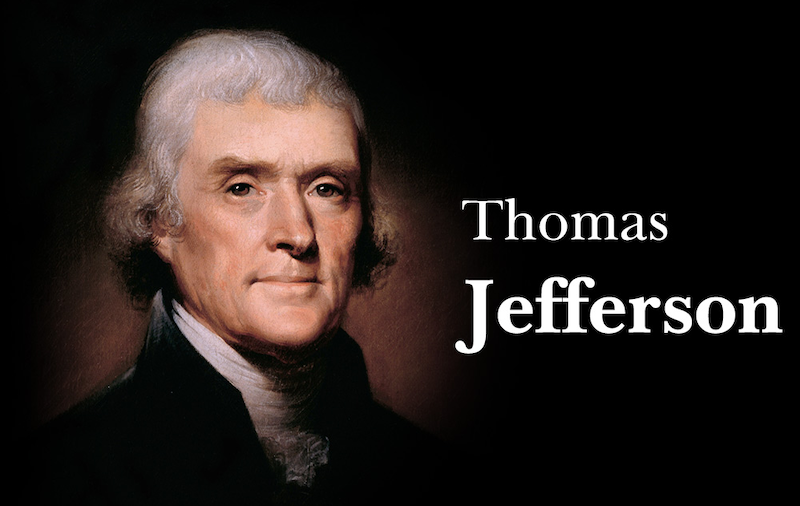 This is where the old founding-era argument becomes a live one again, dressed in modern clothes. Is the answer more government — universal healthcare, a stronger and more comprehensive safety net, direct intervention in housing and labor markets — to manage an economy that has stopped managing itself? Proponents of this view point to other developed nations with stronger social safety nets and ask why America, the wealthiest country in human history, should accept worse outcomes on health, retirement security, and economic mobility than its peers. Or is the answer closer to Jefferson's instinct: that an overgrown state, however well-intentioned, eventually crowds out the very self-reliance, local initiative, and entrepreneurial risk-taking that built the country in the first place? Proponents of this view point to slowing economic dynamism, declining rates of new business formation, and a regulatory thicket that makes it harder than it once was to start a company, build a house, or simply be left alone. Both arguments have serious people behind them, on both ends of the political spectrum and in between. Neither side has clearly won, 250 years in — and perhaps neither side was ever meant to.
|
|||
| search engine by freefind |
Your ad could be in the next issue of idleguy.com for as little as $6 per month. Contact Fearless Rick using the form on page 15 for more information.
is the official online marketplace for idleguy.com and dtmagazine.com, featuring vintage magazines and other merchandise for sale.