All About Independence in America
This month, the IdleGuy.com librarian offers up a truly American reading list, tying into the nation's 250th Anniversary. Alexis de Tocqueville, Alexander Hamilton, George Washington, Thomas Jefferson, Ben Franklin, and a host of literary and luminary men of courge and conviction grace the pages of the July selections.
Democracy in America has had the singular honor of being even to this day the work that political commentators of every stripe refer to when they seek to draw large conclusions about the society of the USA. Alexis de Tocqueville, a young French aristocrat, came to the young nation to investigate the functioning of American democracy and the social, political and economic life of its citizens, publishing his observations in 1835 and 1840.
Brilliantly written, vividly illustrated with vignettes and portraits, Democracy in America is far more than a trenchant analysis of one society at a particular point in time. What will most intrigue modern readers is how many of the observations still hold true: on the mixed advantages of a free press, the strained relations among the races and the threats posed to democracies by consumerism and corruption. So uncanny is Tocqueville’s insight and so accurate are his predictions, that it seems as though he were not merely describing the American identity but actually helping to create it.
In this masterful book, David McCullough tells the intensely human story of those who marched with General George Washington in the year of the Declaration of Independence – when the whole American cause was riding on their success, without which all hope for independence would have been dashed and the noble ideals of the Declaration would have amounted to little more than words on paper.
Based on extensive research in both American and British archives, 1776 is a powerful drama written with extraordinary narrative vitality. It is the story of Americans in the ranks, men of every shape, size, and color, farmers, schoolteachers, shoemakers, no-accounts, and mere boys turned soldiers. And it is the story of the King’s men, the British commander, William Howe, an his highly disciplined redcoats who looked on their rebel foes with contempt and fought with a valor too little known. At the center of the drama, with Washington, are two young American patriots, who, at first, knew no more of war than what they had read in books – Nathaniel Green, a Quaker who was made a general at thirty-three, and Henry Knox, a twenty-five-year-old bookseller who had the preposterous idea of hauling the guns of Fort Ticonderoga overland to Boston in the dead of Winter. But it is the American commander-in-chief who stands foremost – Washington, who had never before led an army in battle.
Written as a companion work to his celebrated biography of John Adams, David McCullough’s Pulitzer Prize winning, 1776, is another landmark in the literature of American history.
The prizewinning author of Founding Brothers and American Sphinx now gives us the unexpected story of why the thirteen colonies, having just fought off the imposition of a distant centralized governing power, would decide to subordinate themselves anew. The triumph of the American Revolution was neither an ideological nor political guarantee that the colonies would relinquish their independence and accept the creation of a federal government with power over their individual autonomy.
The Quartet is the story of this second American founding and of the men responsible -- some familiar, such as George Washington, Alexander Hamilton, John Jay, and James Madison, and some less so, such as Robert Morris and Gouverneur Morris. It was these men who shaped the contours of American history by diagnosing the systemic dysfunctions created by the Articles of Confederation, manipulating the political process to force a calling of the Constitutional Convention, conspiring to set the agenda in Philadelphia, orchestrating the debate in the state ratifying conventions, and, finally, drafting the Bill of Rights to assure state compliance with the constitutional settlement.
The U.S. Constitution is among the oldest constitutions in the world–and one of the most difficult to amend. At what cost? In this landmark, lavishly illustrated book, Harvard professor of history and law Jill Lepore argues that the philosophy of amendment is foundational to American constitutionalism. Challenging both originalism and the Supreme Court’s monopoly on constitutional interpretation, Lepore argues that the framers never intended for the Constitution to be kept, like a butterfly, under glass, but instead expected that future generations would be forever tinkering with it, improving the machinery of government. In an account as radical as Charles Beard’s An Economic Interpretation of the Constitution of the United States, Lepore offers a sweeping, lyrical, and democratic constitutional history, telling the stories of generations of Americans who have attempted everything from abolishing the Electoral College to guaranteeing environmental rights, hoping to mend America by amending its constitution.
Soon after the start of the American Revolutionary War in 1775 the Thirteen Colonies proclaimed their independence from British rule and became the United States of America The written word proved vital in shaping America s new identity laying the groundwork for societal principles and political doctrine alike From Thomas Jefferson and the members of the Second Continental Congress to Alexander Hamilton James Madison and John Jay the authors of these documents had a profound and lasting effect on United States history This collection includes unabridged versions of five famous and influential documents that helped to found a nation: the Declaration of Independence, 1776: the Articles of Confederation, 1777; the United States Constitution, 1787; the Federalist Papers, 1787, 1788; and the Bill of Rights, 1791.
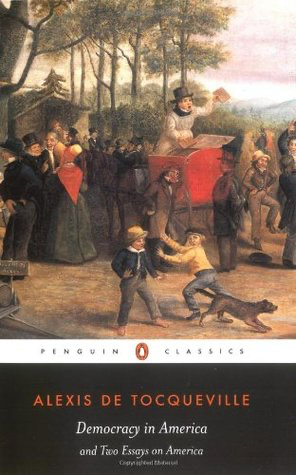 Democracy in America by Alexis de Tocqueville (1840)
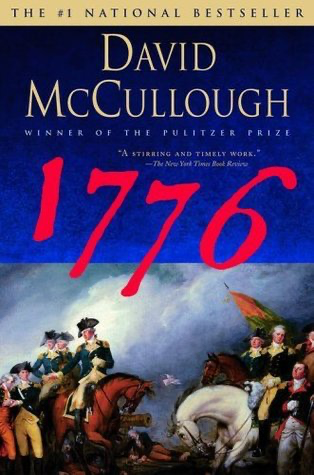 1776 by David McCullough (2005)
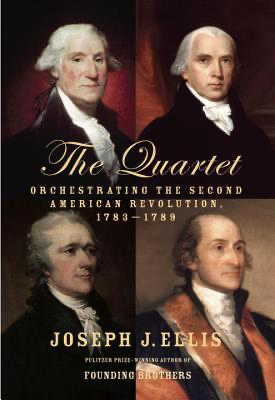 The Quartet: Orchestrating the Second American Revolution, 1783-1789 by Joseph J. Ellis (2015)
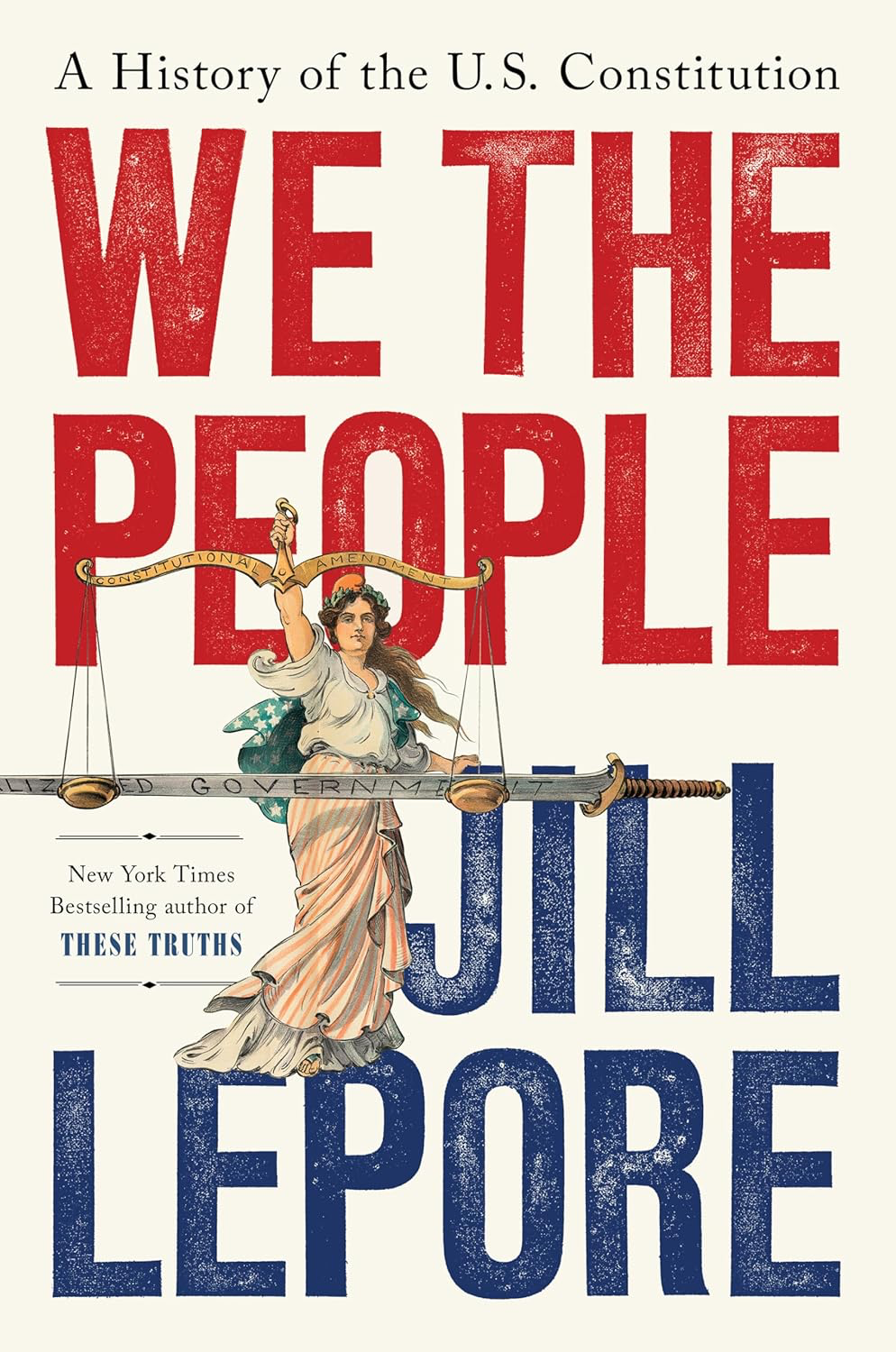 We the People: A History of the U.S. Constitution by Jill Lepore (2025)
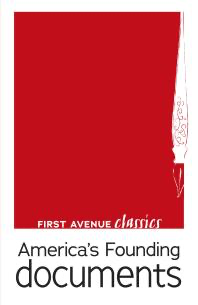 America’s Founding Documents by Thomas Jefferson, Alexander Hamilton, John Jay, James Madison (1776, 1777, 1787, 1788, 1791)
|
|||
| search engine by freefind |
Your ad could be in the next issue of idleguy.com for as little as $6 per month. Contact Fearless Rick using the form on page 15 for more information.
is the official online marketplace for idleguy.com and dtmagazine.com, featuring vintage magazines and other merchandise for sale.