America's Continuous Disagreement, Part Two: How We Got Here
The argument Hamilton and Jefferson started in 1791 didn't end. It just changed size.
The men who founded the country were not of one mind about what they had built, and they did not pretend otherwise. The Declaration of Independence was a statement of unity against a common enemy, signed by men who agreed on very little beyond the urgent necessity of breaking from Britain. The Constitution that followed eleven years later was, underneath its calm legal language, a negotiated truce between two competing visions of what an American government should actually do once independence was secured and the harder work of self-governance began.
On one side stood Alexander Hamilton, the nation's first Treasury Secretary, who looked at the young, debt-ridden, disorganized confederation of states and saw a country that needed strength simply to survive its own infancy. He had served as an artillery officer and as Washington's aide-de-camp during the Revolution, and he had watched the Continental Army nearly collapse for lack of funding, supply, and a competent national authority capable of paying soldiers or honoring debts. That experience shaped everything that followed. As Treasury Secretary, Hamilton proposed a national bank modeled loosely on the Bank of England, federal assumption of the states' Revolutionary War debts, tariffs to protect emerging domestic manufacturing from European competition, and an interpretation of the Constitution's "necessary and proper" clause broad enough to justify all of it. He was not interested in repeating the experiment of weak central government the country had just tried, and failed, under the Articles of Confederation.
On the other side stood Thomas Jefferson, the nation's first Secretary of State, who saw the same young country and worried about a different and, to him, more dangerous failure mode entirely. To Jefferson, a powerful central bank controlled by financial elites and an energetic federal government willing to stretch its constitutional powers looked uncomfortably similar to the British monarchy the colonies had just spent eight bloody years fighting to escape. He envisioned America instead as a republic of independent yeoman farmers, largely self-governing at the state and local level, with a federal government limited mostly to common defense and foreign affairs and otherwise kept deliberately weak. Concentrated power, in Jefferson's view, corrupted regardless of who held it or how virtuous their stated intentions — a king in London, a financier in Philadelphia, or eventually, an unelected bureaucrat in Washington.
The disagreement never resolved itself; it simply migrated to new battlefields as the country grew. Andrew Jackson, the populist president of the 1830s, killed the Second Bank of the United States, convinced it concentrated dangerous and unaccountable power in the hands of a financial elite at the expense of ordinary citizens — an argument that sounded distinctly Jeffersonian even though Jackson rarely invoked Jefferson by name. The Civil War settled the constitutional question of secession permanently in favor of federal supremacy, but in the process it reopened and expanded the question of federal authority far beyond anything the Founders had contemplated: a national currency, a national military draft, and the nation's first federal income tax all arrived to fund the Union war effort, and most of that new federal machinery outlasted the war that created it.
The Gilded Age that followed produced robber barons and industrial monopolies that Hamilton might have admired for their sheer ambition and productive capacity, and that Jefferson would have despised as exactly the kind of concentrated, unaccountable power his entire political philosophy was built to prevent. The Progressive Era's response — trust-busting under Theodore Roosevelt, the creation of the Federal Trade Commission and the Food and Drug Administration, the ratification of the constitutional amendment establishing a permanent federal income tax in 1913 — was, in its way, an attempt to split the difference: harnessing Hamiltonian federal power to restrain Hamiltonian-scale private power, in the name of protecting the kind of ordinary citizen Jefferson had always claimed to champion.
What is worth remembering, 250 years on, is that neither Hamilton nor Jefferson was simply right or simply wrong, and history has not rendered a final verdict in either man's favor. The country needed something close to Hamilton's financial architecture to survive its first chaotic century, build its industrial base, and eventually project power on a global scale. It also needed something close to Jefferson's persistent suspicion of concentrated power to keep that architecture from hardening into something closer to the monarchy the Revolution had explicitly rejected, and to preserve space for the kind of local self-government and individual initiative both men, in their different ways, claimed to value. The genius of the system they built together, however reluctantly and however bitterly they personally disagreed, was that it never had to choose permanently between them. It only had to keep arguing, peacefully, through elections rather than through the kind of violence that has settled similar disputes in less fortunate nations.
That argument is still running, 250 years later. The size and reach of government described on page 5 — the modern welfare-warfare state, the trillions in annual spending, the administrative distance that now separates the ordinary citizen from the decisions made in his or her name — is not a departure from the founding disagreement between these two men. It is that disagreement, refought in every generation since, through depression and war and technological revolution, still working itself out one election, one court case, and one piece of legislation at a time. The Founders did not build a government designed to settle the question of its own proper size. They built one designed to keep asking it, indefinitely, which may turn out to be the more durable achievement.
Sources
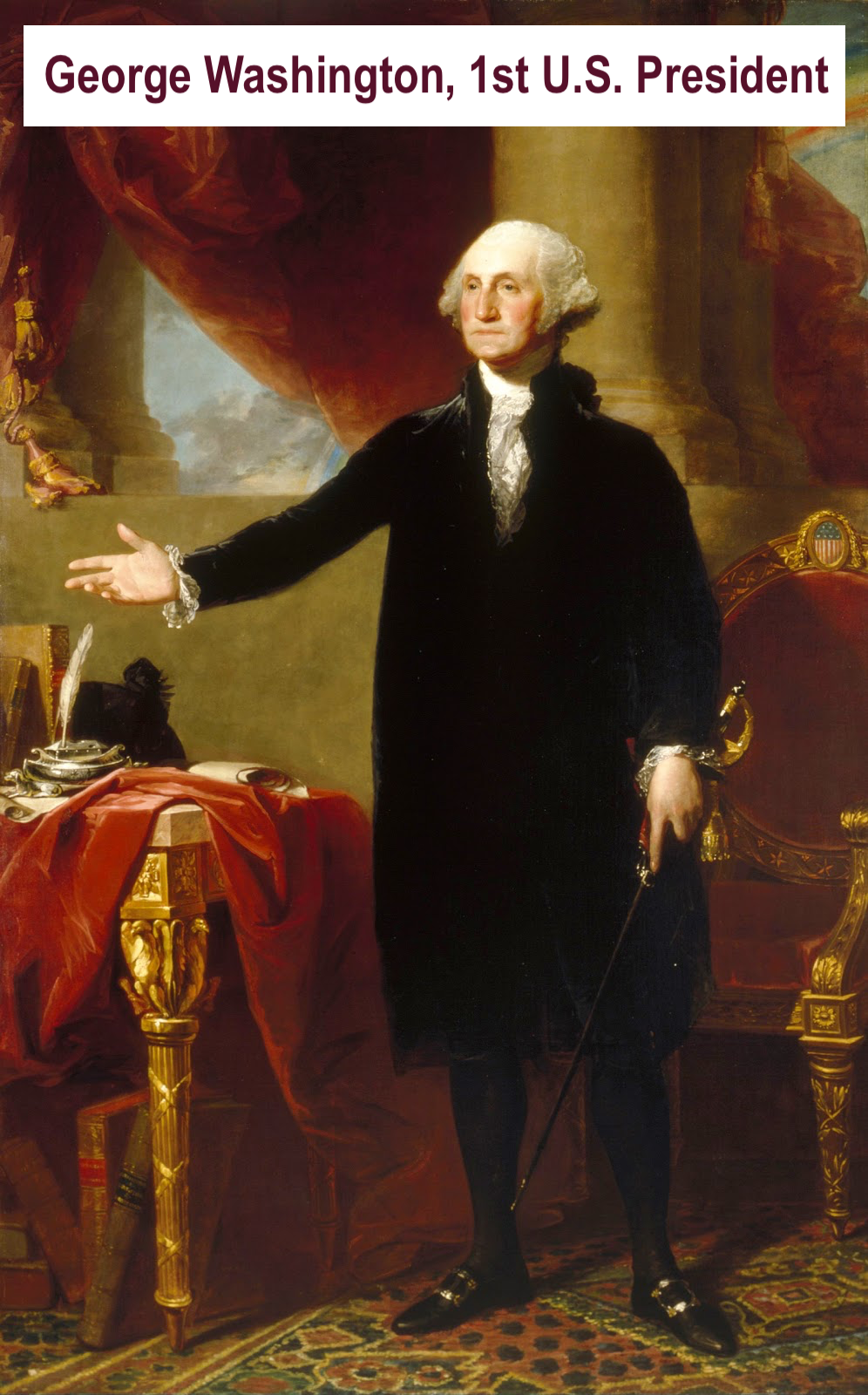 George Washington, presiding uneasily over both men in his cabinet and determined to hold the new government together, generally sided with Hamilton on questions of national finance. The First Bank of the United States was chartered in 1791 over Jefferson's strenuous written objections, and Hamilton's financial program, controversial as it was, succeeded in stabilizing the young nation's credit and establishing its reputation among foreign lenders. But Jefferson's vision did not lose so much as wait its turn. He was elected president in 1800 in what he himself called the Revolution of 1800, and his administration rolled back internal taxes, shrank the military and the federal payroll, and worked to pay down the national debt Hamilton had structured. The pendulum had swung once, decisively, and it would keep swinging for the next two and a half centuries, never settling permanently on either man's vision.
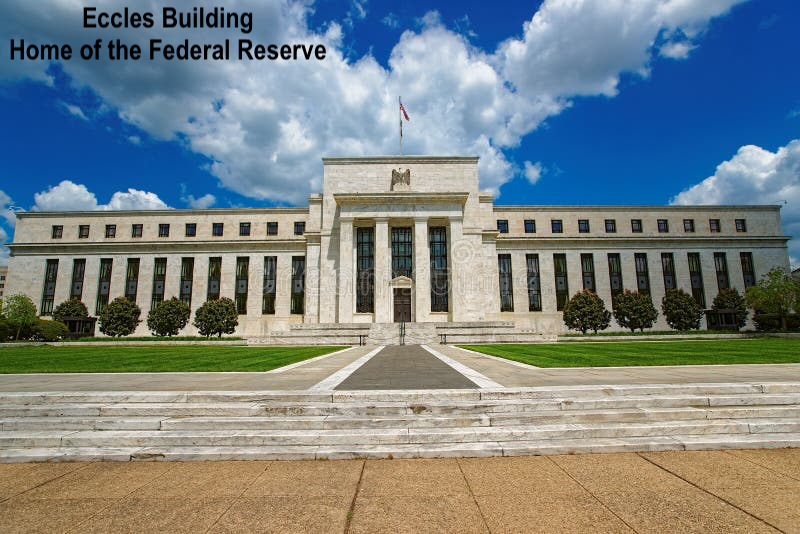 The 20th century mostly tilted Hamiltonian, for reasons neither founder could have anticipated. Two world wars and a decade-long depression made the case for an energetic, centralized federal government more persuasively, and more urgently, than Hamilton himself ever could have argued it. Franklin Roosevelt's New Deal built Social Security, federal deposit insurance, and a permanent expectation that Washington would intervene actively when markets failed catastrophically. The Federal Reserve, established in 1913 as a compromise central banking system, gradually became the dominant force in American monetary policy, managing interest rates and the money supply in ways Hamilton's original, far more limited bank never attempted. The Cold War kept the military half of that equation growing for nearly fifty more years, building a permanent defense and intelligence establishment that persisted largely intact even after the Soviet threat that justified its creation had disappeared.
National Archives, Founders Online
Library of Congress, American Memory
U.S. Department of the Treasury / IRS History
Federal Reserve History
Office of Management and Budget, Historical Tables
|
|||
| search engine by freefind |
Your ad could be in the next issue of idleguy.com for as little as $6 per month. Contact Fearless Rick using the form on page 15 for more information.
is the official online marketplace for idleguy.com and dtmagazine.com, featuring vintage magazines and other merchandise for sale.