Red, Ripe, and Ready: The Story of the Strawberry
Spring has a way of announcing itself in stages — the first warm afternoon, the crocuses pushing up through thawed ground, the smell of rain on dry earth. But for many people, spring doesn't truly arrive until the strawberries show up. Bright red, fragrant, and sweet, the strawberry is one of nature's most satisfying harbingers of warmer days ahead. It sits on the cover of this issue for good reason. What you may not know is that the humble strawberry has a surprisingly rich and colorful history — one involving a French spy, a transatlantic botanical romance, Native American tradition, and one very peculiar noblewoman with an unusual approach to bathing. Let's start with a botanical reality check. Despite the name, a strawberry is not technically a berry. It is what botanists call an "aggregate accessory fruit" — meaning the fleshy red part we eat is actually the enlarged base of the flower, not the fruit itself. The tiny yellow dots on the surface are the true fruits, each one called an achene, containing a single seed. So the next time someone tells you they love strawberries, you can inform them that they are not, in fact, eating berries at all. This will not make you popular at parties, but it is accurate. The name "strawberry" is also a bit of a mystery. Many people assume it refers to the practice of mulching plants with straw in winter, which is indeed done. But most word historians believe "strawberry" is a corruption of "strewn berry," referring to the way the plant sends out runners that strew themselves across the ground. The genus name, Fragaria, is more straightforward — it comes from the Latin word for fragrance. Wild strawberries have been gathered and eaten for thousands of years across North America, Europe, and Asia. The ancient Romans wrote about them — the poet Virgil warned readers to watch out for snakes lurking beneath the strawberry plants, and Ovid noted that people in the Golden Age lived on wild fruits including mountain strawberries. Medieval stonemasons carved strawberry designs into church altars and cathedral pillars as symbols of perfection and righteousness. For Native American tribes in the eastern regions of what is now the United States, the strawberry held particular significance. June was known as the "Strawberry Moon," the month when the berries began to ripen. Berries were mixed with cornmeal and baked into a kind of strawberry bread that is considered an early ancestor of the modern strawberry shortcake. The fruit was also used medicinally, and a tea brewed from strawberry leaves was believed to stimulate the appetite and clean the teeth. The wild varieties, though intensely flavorful, were small — not nearly large enough to interest commercial growers. That began to change in the 1600s and 1700s as two species from opposite ends of the Americas crossed paths in European gardens. In 1712, a French military engineer and spy named Amédée-François Frézier was sent to Chile to gather intelligence on Spanish fortifications near Concepción. While there, he noticed the local strawberry — Fragaria chiloensis — and was struck by its unusually large fruit and faintly pineapple-like fragrance. He brought five plants back to France, keeping them alive on the long voyage by sharing his own water ration with them. In European botanical gardens, this Chilean newcomer grew near the Virginia wild strawberry (Fragaria virginiana), which had been brought over from North America in the 1600s. The two plants naturally cross-pollinated, and the result — Fragaria × ananassa, the garden strawberry — was the ancestor of virtually every commercial strawberry variety grown and eaten in the world today. The name ananassa means pineapple, a nod to the Chilean parent's distinctive aroma. The first garden strawberries were developed in Brittany, France, around 1750. By the early 1800s, English growers had taken to strawberry breeding with tremendous enthusiasm, and the Horticultural Society of London sent printed forms to gardeners across the country asking them to catalog their varieties. More than 400 samples poured in. The modern strawberry was on its way. Ironically, the new cultivated strawberry had to make its way back across the Atlantic, arriving in the United States in the late 1700s. By 1825, strawberry production was well established here, and in 1838 a Massachusetts grower named Charles Hovey introduced the first widely popular American variety, aptly named "Hovey." It is considered a parent of all modern commercial varieties. Today the United States is among the world's leading strawberry producers, with California accounting for roughly 90 percent of domestic production. California grows strawberries nearly year-round, with peak harvest from early spring through fall. Florida, the second-largest producer, operates on a different calendar entirely — its season runs from November through March, making Florida the dominant source of winter strawberries when most of the country is still in the grip of cold weather. If you want to understand just how seriously some Americans take their strawberries, look no further than Plant City, Florida, a small city of about 40,000 people located roughly 25 miles east of Tampa. Plant City produces approximately 75 percent of the nation's midwinter strawberry crop, earning it the official title of the Winter Strawberry Capital of the World. It wasn't always this way. In the late 1800s, Plant City's main industries were lumber, cotton, citrus, and cattle. Then a series of killing freezes devastated the established crops, and a small group of enterprising farmers tried planting strawberries instead. They were astonished by how well the plants survived the cold. The railroad built by Henry Plant — the developer for whom the town is named — provided the link to Tampa and northern markets, and the strawberry industry took root. Today, more than 10,000 acres of strawberries are planted annually in the Plant City area, across roughly 2,800 farms, generating over $360 million in annual produce value. The local industry has an economic impact of over a billion dollars on Hillsborough County alone. Each year, Plant City celebrates its signature crop with the Florida Strawberry Festival, an 11-day event first held in 1930 by the local Lions Club as a way to thank the farmers and put the town on the map. It was suspended during World War II and revived in 1948, and it has grown ever since into one of the top 40 fairs in North America, drawing as many as 600,000 visitors — fifteen times the local population. Past entertainment headliners have included Willie Nelson, Taylor Swift, and Blake Shelton. Fairgoers can sample strawberry shortcake, strawberry pizza, strawberry brisket tacos, and apparently, if one is adventurous, deep-fried strawberry pie on a stick. A few strawberry facts worth knowing: Modern commercial strawberry varieties fall into three general categories: There is a quote attributed to the 17th-century English writer Dr. William Butler that has endured for four centuries: "Doubtless God could have made a better berry, but doubtless God never did." The sentiment holds up. Whether you are eating them fresh from the carton, layered into a shortcake, dipped in chocolate, blended into a smoothie, or — if you happen to be a Napoleonic socialite — soaking in them, strawberries occupy a special place in the American table and imagination. April is when they start showing up in earnest at farmers markets in the South and mid-Atlantic states, a bright red signal that winter is genuinely over. Pick up a flat the next chance you get. You have earned it. Sources: University of Missouri - Strawberry: A Brief History Clemson University - Heart-Seeded Berries Strewn About the World Royal Horticultural Society - A Transatlantic Tango: The Story of the Strawberry USDA Economic Research Service - U.S. Fresh Strawberry Production WUSF - How Plant City Became the Winter Strawberry Capital of the World Florida Strawberry Festival - History
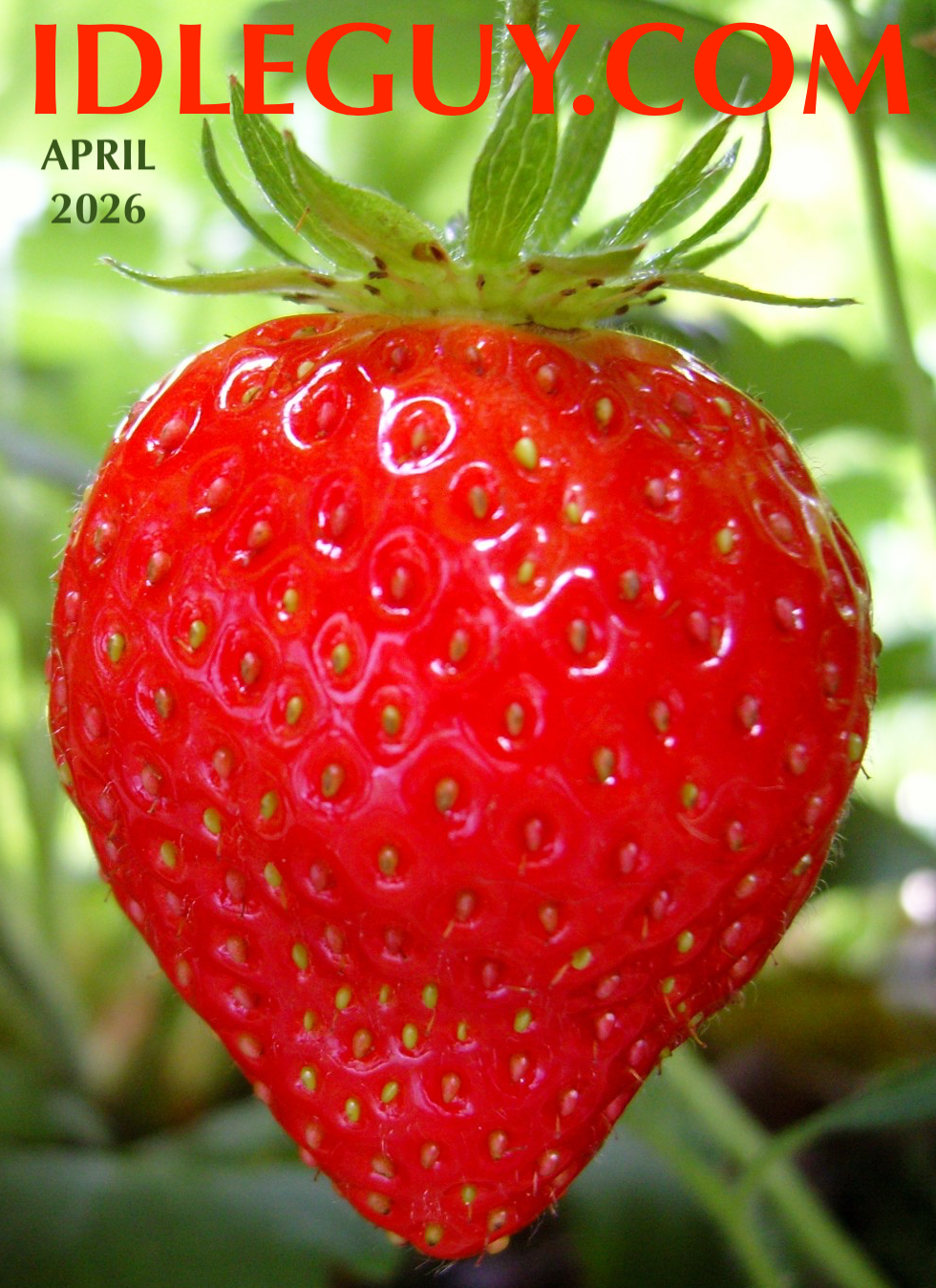
Not Actually a Berry
From the Forest Floor to the Garden
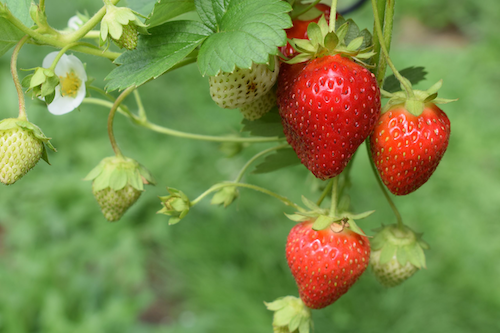
Enter the French Spy
Strawberries Come to America
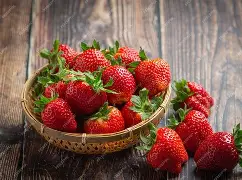
Plant City: The Winter Strawberry Capital of the World
Fun Facts and Strange History
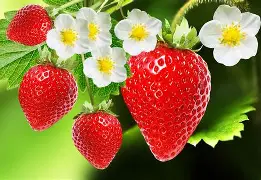
Three Types of Strawberries
Type
Harvest
Notes
June-Bearing
One large crop in late spring or early summer
Most common; larger fruit but shorter window of about two to three weeks
Everbearing
Two to three crops per year (spring, mid-summer, fall)
Smaller crops each time; good for home gardens
Day-Neutral
Continuous production throughout the growing season
Does not respond to day length; widely used in California's extended commercial season
The Perfect Spring Fruit
|
|||
| search engine by freefind |
Your ad could be in the next issue of idleguy.com for as little as $6 per month. Contact Fearless Rick using the form on page 12 for more information.
has vintage magazines, merchandise and free ads for merchants.
Got something to sell? Registration is free and there are no fees on the idleguy.com marketplace.