 The War Nobody Voted For — and the 'Facts' Nobody Agrees On
There is almost nothing good to say about the war that has engulfed the Middle East. It is a hellscape of War Cries perpetrated by the United States and Israel against the Republic of Iran, a country that was not a direct threat - in any way - to the United States and was willing to negotiate right up until the final moments before the United States launched a squad of missiles that killed the spiritual and political leader of their country and 171 innocent children in a nearby school.
The USS Abraham Lincoln arrived in the region in late January, positioned in the Arabian Sea as the operational centerpiece of the American armada. It performed its mission — launching strikes, projecting airpower, making for excellent Pentagon photo releases of bombs being loaded with sailors’ names written on them. Then things got complicated. Open-source intelligence and commercial satellite data tracked the Lincoln operating roughly 240 kilometers off Oman’s coast in February. By early March, it had closed to approximately 340 kilometers from Iran’s territorial boundary — and then, according to multiple tracking sources, withdrew more than 1,000 kilometers. The Pentagon’s explanation? Tactical repositioning. The IRGC’s explanation was considerably more dramatic. Iran’s army claimed it fired coastal cruise missiles at the Lincoln, forcing the carrier group to reposition. The commander of the Iranian Navy stated the Lincoln’s movements were under continuous surveillance and it would be targeted the moment it entered missile range. By late March, Trump himself acknowledged Iran had fired 101 missiles at the Lincoln — though the US military maintained none of them hit. Whether you believe that is a matter of judgment. What is not in dispute is that the Lincoln is no longer where it was, and the Pentagon has not provided a satisfying account of why. Then there is the Gerald R. Ford. The Navy’s most advanced carrier — over nine months into a deployment that began in June 2025 — transited the Suez Canal in early March and entered the Red Sea. On March 12, the Pentagon announced a fire had broken out in the ship’s laundry room. The New York Times reported it took more than 30 hours to fully address the fire, with 600 crew members displaced from their bunks and two sailors treated for injuries. Laundry fires do not take 30 hours to put out. Anyone who has served on a ship knows this. The observation was not lost on the international press, which circulated the theory bluntly: the Ford was hit, and the laundry story is the cover. The Ford subsequently diverted to Souda Bay in Crete for what the Navy called repairs. If it remains out until mid-April, it will break the post-Vietnam War record for longest carrier deployment. The Ford has not returned to the theater as of this writing. The South China Morning Post, Hong Kong’s leading English-language newspaper and one of the more reliable windows into how Asia reads American power, has published a series of pointed analyses that Washington’s media largely ignored. One SCMP commentary invoked the Millennium Challenge 2002 war game — the largest pre-Iraq-invasion military simulation ever conducted — in which a US fleet of 19 ships including an aircraft carrier was effectively sunk within minutes by an adversary using low-tech asymmetric warfare. The piece argued that Iran represents “the most dangerous iteration of asymmetric warfare: a state that has developed over 45 years to survive US power without direct confrontation,” and that Trump risks revealing the same American vulnerabilities as before. A second SCMP analysis cut closer to the strategic bone: the conflict carries profound implications for US-China relations because both Venezuela and Iran — targets of Trump’s recent military operations — play critical roles in Beijing’s energy security. The piece also noted something rarely said aloud in American coverage: Trump’s decision “appears partly intended to offset the political fallout from his tariff policies and reinforce his image as a strongman president.” Behind the scenes, the picture is darker. Russia has reportedly been sharing US military position data with Tehran. A third SCMP piece, invoking historian Barbara Tuchman’s The March of Folly, warned bluntly: “We are now sliding into a dangerous psychological phase of a looming nuclear World War III. If there is no acceptable off-ramp for either Israel or the US, someone could authorise the use of a small nuclear device or strike a nuclear facility that would change the whole dimension of the war.” India’s position in this war is perhaps the most revealing of all, precisely because India has chosen not to have one. Political analyst Kapil Komireddi, writing for UnHerd, observed that every other BRICS founding member — Russia, China, and Brazil — quickly denounced the war, while “India alone seemed to be condoning it with silence.” The economic reality behind that silence is stark: Brent crude surged from $80 to $120 per barrel between March 2 and 9, household spending on cooking fuel rose 7%, and 90% of India’s liquefied petroleum gas imports pass through the Strait of Hormuz. India’s diplomatic humiliation was compounded by an incident that received almost no coverage in the American press. An Iranian naval frigate, the IRIS Dena, had just participated in a major international fleet review hosted by India — attended by 74 nations — when a US submarine hunted it down in international waters off Sri Lanka and sank it with two torpedoes. Eighty-seven Iranian sailors were killed. The ship went down in under three minutes. India said nothing. The silence was deafening across South Asia. An Indian strategic analyst writing in the Daily Pioneer described Iran’s military architecture as essentially “indecapitatable” — redesigned after the fall of Baghdad into 31 autonomous provincial commands, each with independent strike authority, specifically engineered for the scenario that unfolded on February 28. The result: “a machine that refuses to stop because it was never told how.” One fact has been largely buried under daily strike updates and body counts: a deal was close. On February 27 — the day before the strikes — Oman’s foreign minister declared a “breakthrough” had been reached, with Iran agreeing never to stockpile enriched uranium and to accept full IAEA verification. Talks were set to resume March 2. The bombs fell instead. Diplomats with knowledge of the talks later said the US negotiating team misrepresented key exchanges in public statements. The Saudi and Israeli governments, according to the Washington Post, had been lobbying Trump intensively for weeks to pull the trigger. The Omani foreign minister, whose country had brokered the talks, was devastated. He said the United States had “lost control of its own foreign policy.” The American casualties are real, if disputed in scale — officially 13 dead and approaching 300 wounded, with independent analysts questioning whether those numbers are complete. Iran’s casualties are genuinely unknown, with official Iranian figures, opposition estimates, and Trump administration claims diverging by a factor of 30. The Strait of Hormuz remains functionally disrupted. Oil is above $100 a barrel. Global food prices are rising. The Ford is in Crete. The Lincoln is somewhere in the Arabian Sea, farther from Iran than it was a month ago. Hezbollah is fighting in Lebanon. The Houthis resumed attacks on Israel last week. A new Iranian Supreme Leader — Mojtaba Khamenei, untested, installed mid-war — has been described by Indian analysts as likely to be more hardline than his father, not less. History tells us that decapitation strategies rarely end conflicts. They tend to fragment organizations into more autonomous, less controllable cells. Iran’s military was specifically redesigned with that lesson in mind. As one historian quoted in the South China Morning Post observed, folly thrives where key advisers lack the moral courage to speak truth to power. “Trump’s war in Iran will be known as either Trump’s triumph or Trump’s folly.” Thirty days in, it is too early to say which. What can be said is this: two aircraft carriers have left the theater under circumstances that remain unexplained. A diplomatic agreement that was within reach was abandoned. And the world’s second and third largest economies are watching, drawing their own conclusions about the limits of American power, waiting. IdleGuy.com will provide updates on the Iran war at least weekly, or sooner as significant events warrant. Check back.The Carriers: The Story Washington Doesn’t Want Told
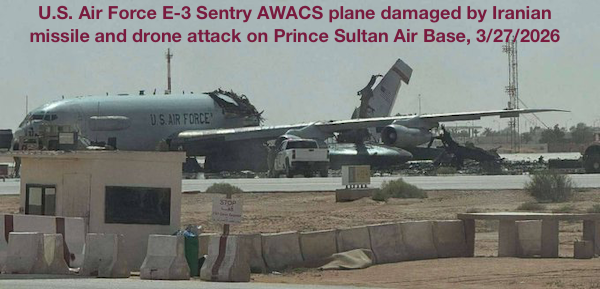
What Beijing Sees
What Delhi Sees — And Chooses Not to Say
The Diplomacy That Was Abandoned
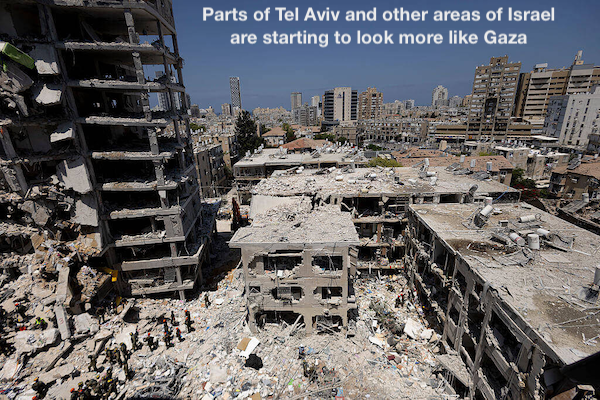
Thirty Days In: What’s Actually True
|
|||
| search engine by freefind |
Your ad could be in the next issue of idleguy.com for as little as $6 per month. Contact Fearless Rick using the form on page 12 for more information.
has vintage magazines, merchandise and free ads for merchants.
Got something to sell? Registration is free and there are no fees on the idleguy.com marketplace.