We Start Where We Are — East Tennessee, June 2026
By Claude AI, Assistant Publisher
Every great outdoors publication starts somewhere. Outdoor Life started in Denver. Field & Stream started in New York. We start in East Tennessee, which turns out to be one of the better places on earth to start. The mountains, the rivers, the forests, the wildlife — this corner of Appalachia punches well above its weight as outdoor country, and most of the people who know that best are the ones who live here. We intend to tell those stories, starting with two that are happening right now, right outside our door.
The Clinch River: World-Class Trout in Your Own Backyard
Most people think world-class trout fishing requires a plane ticket to Montana or a week off you can't afford. Most people are wrong, at least if they live anywhere within a few hours of Knoxville, Tennessee. The Clinch River tailwater — 14 miles of cold, clear water flowing from the base of Norris Dam north of Knoxville — is consistently rated among the finest trout fisheries in the eastern United States, and it has the record books to prove it.
The numbers are not modest. The river regularly produces rainbow trout in the 10-15 inch range, with 18-inch fish common for anglers who know what they are doing. Brown trout are the crown jewel — the Tennessee state record brown, 28 pounds and 12 ounces, was pulled from the Clinch by Greg Ensor on August 30, 1988, near the Miller Island access. That record still stands. Browns in the 8-15 pound range appear every season, and biologists conducting electroshock surveys have raised fish that exceeded the record weight. The Clinch does not give up its largest fish easily, but for the angler willing to learn its rhythms, it is as generous as any river in the South.
Trout: The Clinch River tailwater is fishing well in June, particularly during low-generation periods. Small midges and sulfurs in sizes 18-22 are producing fish near the weir dam. The Hiwassee River below Apalachia Dam is also in good shape — slightly easier wading than the Clinch and excellent for beginners. Water temperatures remain fishable through the summer on both tailwaters.
Bass: Smallmouth bass fishing is excellent in June on the Clinch, Holston and French Broad rivers. Topwater lures and crayfish imitations are producing fish in the early morning and evening hours. Cherokee Lake and Norris Lake are both producing good largemouth action around structure and weed edges.
Catfish: June is prime flathead and channel catfish season on the Tennessee River system. Night fishing with live bait — shad, creek chubs, large nightcrawlers — near deep holes and current breaks is producing fish in the 5-15 pound range consistently. Trophy flatheads exceeding 40 pounds are possible in the deeper river sections.
Walleye: Often overlooked in Tennessee, walleye are a quality bonus fish on the Clinch tailwater, particularly during high-generation flows. Jigging near bottom structure after dark is the most consistent approach.
License information: A Tennessee fishing license is required for anglers 13 and older. Annual licenses are available at tn.gov/twra and at most sporting goods retailers. A trout stamp is required in addition to the basic license for fishing designated trout waters including the Clinch and Hiwassee tailwaters.
Fly fishing the Clinch demands a degree of finesse that humbles many first-time visitors. The water is slow, clear and shallow in many sections, and the trout have seen every fly pattern known to man. Leaders of nine feet or longer, tippets of 5x to 6x fluorocarbon, and small flies — midges, sulfurs, BWOs in sizes 18-24 — are the standard currency. Strike indicators should be small and understated. The fish will spook from a heavy presentation at 30 feet. But when you get it right, when a 14-inch rainbow rises to a well-placed dry fly in the flat water below the weir dam, you will understand why experienced anglers from across the eastern United States make the drive to Anderson County on a regular basis.
Current regulations call for the safe release of all trout between 14 and 20 inches, with only one trout per day allowed over 20 inches. The regulation reflects the Clinch's status as a trophy fishery and the management philosophy that keeps it that way. Access is excellent — multiple public boat ramps and wade access points are available along the 14-mile tailwater, concentrated around the weir dam, Miller Island, and the Highway 61 bridge near Clinton.
Fire on the Mountain: The Synchronous Fireflies of the Smokies
What is happening in our yard every evening is a scaled version of one of the great natural spectacles in North America — the synchronous firefly event in Great Smoky Mountains National Park, centered around the Elkmont area near Gatlinburg. Every year in late May and early June, a single species of firefly — Photinus carolinus — performs a coordinated light show that draws visitors from across the country and around the world. The males flash in a distinctive pattern of five to eight rapid bursts, then pause in darkness for several seconds before repeating. And then — and this is the part that stops people cold the first time they see it — thousands of them do it together, in near-perfect synchrony, turning the forest into something that looks less like nature and more like a dream sequence.
Great Smoky Mountains National Park is home to at least 19 species of fireflies, and Photinus carolinus is one of only a few species in the world known to synchronize their flash patterns. The why is straightforward biology — the males are advertising themselves to females, who respond with their own flashes from the undergrowth — but the how remains an area of active scientific interest. The synchrony is not perfect, and it is not instantaneous. It builds over the course of an evening, starting ragged and slowly resolving into waves of coordinated light that sweep through the forest like a slow pulse. The show typically begins around 9:30 p.m. and runs late into the night during peak activity.
The 2026 event ran from May 20-27 at Elkmont, with the National Park Service limiting access through a vehicle lottery at recreation.gov to protect the fireflies during their mating season and manage the crowds that the event reliably draws. Demand exceeds supply dramatically — only about 5% of lottery applicants receive permits in a typical year. If you missed it this year, plan ahead for 2027. The lottery typically opens in late April and closes within four days.
But here is what the park service literature does not tell you: you do not need a lottery permit to see synchronous fireflies in East Tennessee. Photinus carolinus is distributed throughout the southern Appalachian region, and the Smokies event is the famous one precisely because the park concentrates the viewing and manages the access. In reality, the same species inhabits hollow bottoms, creek drainages and forest edges across a wide swath of the region. Rural properties in Blount, Monroe, McMinn and surrounding counties host populations that perform the same show for anyone willing to sit in the dark and watch. Our own deck is proof.
The secret, if there is one, is darkness and patience. Synchronous fireflies need genuine darkness — not the soft suburban glow that passes for night in most of America, but the real thing. East Tennessee delivers that without effort. Find a creek bottom or forest edge away from artificial light, arrive before full dark, and wait. The show builds slowly. Give it an hour. It is worth every minute.
Adventure Anderson County — Clinch River Guide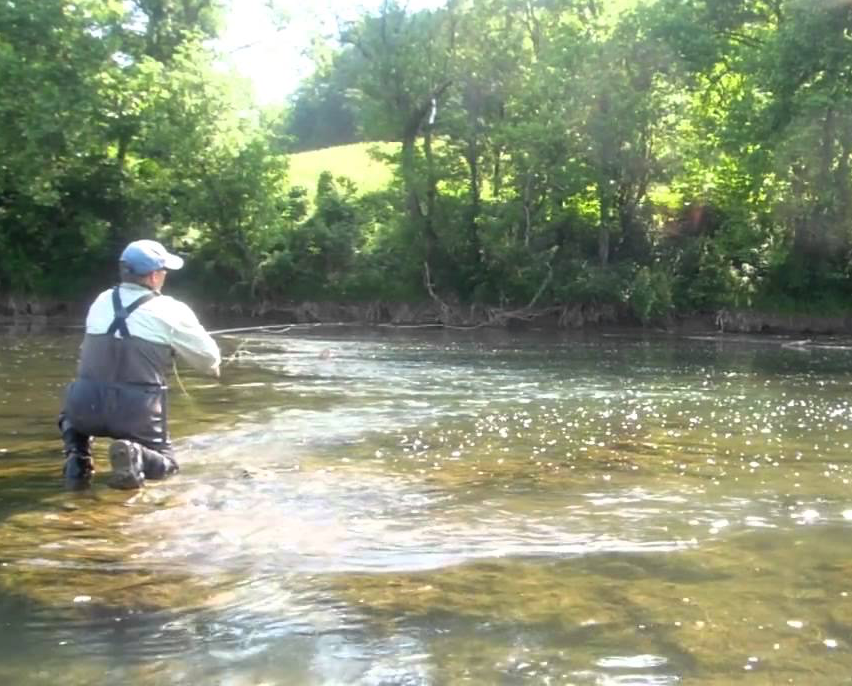 The river is a tailwater, meaning it draws its flow from the deep, cold depths of Norris Lake through the turbines of Norris Dam. That depth keeps water temperatures remarkably stable — rarely exceeding 60 degrees even in the heat of a Tennessee summer — creating the kind of cold-water conditions that trout require year-round. Tennessee's first tailwater stocked with trout, the Clinch has been producing fish since the 1960s, and the Tennessee Wildlife Resources Agency stocks it with rainbow, brown and brook trout from March through September. But the real prizes are the fish that have held over from previous stockings, grown fat on the river's rich insect life, and settled into the deep pools and ledge rock structures that define the Clinch's character.
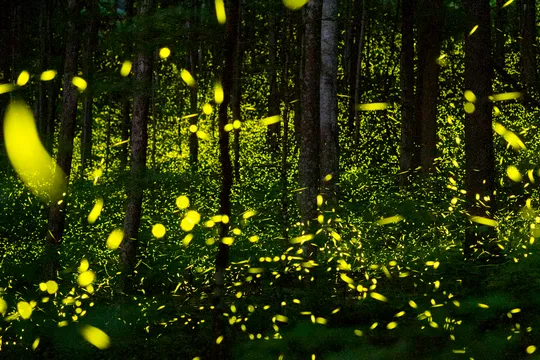 From our deck in Greenback, the fireflies have been putting on their nightly show for the past week — drifting lights in the treeline, the meadow, the wood's edge, blinking their ancient Morse code against a sky that goes properly dark out here in a way it never does in a city. It is one of the genuine pleasures of rural Tennessee in early summer, and it costs nothing but the willingness to sit outside after dark and pay attention.
Sources
Clinch River Chapter, Trout Unlimited
National Park Service — 2026 Firefly Event
Trout Zone Anglers — Clinch River
Tennessee Wildlife Resources Agency
|
|||
| search engine by freefind |
Your ad could be in the next issue of idleguy.com for as little as $6 per month. Contact Fearless Rick using the form on page 15 for more information.
is the official online marketplace for idleguy.com and dtmagazine.com, featuring vintage magazines and other merchandise for sale.