 Silver Will Continue to Shine in 2026
With 2025 coming quickly to an end, this article explores recent developments and history of silver as it continues to make all-time highs and is up more than 100% in 2025.
Prospects for silver in 2026 are as shining as the metal itself. A combination of industrial use, supply shortages, growing investment demand, and developments in China and India suggest that silver's climb is only just beginning. Recently, the gold:silver ratio has fallen from the mid-80s and higher to a four-year low of 72.
The COMEX is losing control of silver futures, that metric being led by physical spot pricing in the real world. With the March contract as the front end, silver futures are back in contango, though the highest price on the futures chain of $60.69 one year out (December 2026) does not reflect very much of the spot market supply side reality. Industrial demand, increasing investment interest, and a severe supply shortage continue to pressure prices higher and the gold:silver ratio lower, to a level not seen since July, 2021, as the world was emerging from the brief and painful COVID experience.
The pandemic slump, which sent the GSR down to a low of 65.41 in February, 2021, was neither very deep nor lasting. Gold and silver prices quickly recovered, with gold the leading edge. This was nothing compared to the post-GFC level of 31.60 posted in February 2011, as silver skyrocketed ahead of all other assets out of the slump, reaching its highest prices since 1980.
From an historical perspective, the lowest levels of the gold:silver ratio were in 1968 and 1980, when this metric was measured in the teens. In between, through the 1970s, the GSR gyrated around the low to mid-30s. This period, post-Vietnam and also post-Bretton Woods, was a time of relative peace and prosperity for much of the world. Once the mechanisms were fully in place for price suppression of precious metals, the proponents of such found it easier to control the price of silver that that of gold, the former being a much smaller market. Of course, this period was subsequent to silver being demonetized in the United States (In 1965 silver coins were removed from circulation and in 1968 silver certificates were no longer redeemable for physical metal.) and antecedent to the infamous Hunt Brothers' escapades in the silver market in 1979 and 1980.
Conditions have changed dramatically since then. In the 50+ years since the 70s, the United States became the world's greatest debtor nation, arguably the world's foremost military aggressor and global hegemon, and today is experiencing a decline in financial and political dominance as the world becomes increasingly fractured and polarized. The main industrial use of silver was in film processing in the 70s and 80s. Today, it's solar energy, EV technology, and military manufacturing, much greater use.
The Sound Money Defense League and Money Metals produce the Sound Money Index which rates the individual states on various criteria in terms of the free use of gold and silver as money. On April 1, 2026, Indian citizens will have the ability to use silver coins and jewelry as collateral for loans, and China, which maintained a silver standard until 1935, has a long history with silver as money.
While silver minted as currency ended abruptly in the mid-20th century, the minting of silver coins for investment purposes has continued uninterrupted. From Canadian Maple Leafs, U.S. Silver Eagles, Australian Kangaroos, Cinese Pandas, and Mexican Libertads, the minting of silver coins of high (.999) purity has proceeded uninterrupted.
Those who believe that a return to a 10:1, 15:1 or 20:1 gold:silver ratio simply don't know their history. It has only been in the past 150 years (essentially since the "Crime of 1873") that silver has not held a tight peg to gold. Recent developments, such as India maximizing silver loans at a 10:1 ratio to gold (1 kilogram gold to 10 kilograms silver) and the Dubai Bank of Bullion specifying minimum purchases of 1 Oz of Gold, Platinum or Palladium and 10 Oz of Silver as minimum purchases, suggest a stealth reordering of the gold:silver ratio.
While the gold:silver ratio appears to be beginning a trend lower, getting back to historical standards of 10:1 ro 20:1 would likely take decades, or, it could happen in the blink of an eye, taking just one populous country, such as India or China, to formally declare a gold:silver ratio for a global reset to occur. The arbitrage possibilities would be so enormous that most, if not all, other countries would soon fall in line with the new standard. It is something that all silver and gold investors should carefully consider.
In the meantime, silver continues its recent acceleration over gold. Year-to-date, silver is up 101.95% to gold's rise of 60.66%. In just the past six months, silver is up a whopping 60% compared to gold's rather "pedestrian" 26%, and the meteoric rise of silver may be just beginning. The gold:silver ratio can drop rapidly. As it is, it has fallen from over 100 in May to its current level of 72. That's 30 points in just eight months. If the trend continues, imagine where it might be in five years and what the price of both gold and silver might be. Estimates range from the reasonable to the absurd, but the numbers bandied about recently focus around $10,000 for gold and $700 for silver, a GSR around 14. Over the near term, $5000 gold and $100 silver (50:1) does not seem far-fetched, even as early as the coming new year.
The 2025 edition of Incrementum's "In Gold We Trust", titled The Big Long by Ronald-Peter Stöferle & Mark J. Valek is free and available for download HERE.
Please read the disclaimer at the end of the article and be sure to do your own due diligence or seek advice from investment professionals.
Republished from idleguy.com, October, 2024
According to Ronald-Peter Stoeferle and Mark Valek, co-authors of the annual In Gold We Trust report, gold and silver have performed remarkably well in the post-gold standard era (since August 1971), racking up average annual gains of 10.8% (Gold) and 12.7% (Silver), and that's despite heavy-handed suppression tactics undertaken by powerful forces behind fiat currencies.
Western central banks, in particular, the Federal Reserve, Bank of England (BOE), and the European Central Bank (ECB), see gold and silver as competing currencies, i.e., money, and have, over the years, sought to keep their values relative to dollars, pounds, and euros, in check. Much of the underhanded dealings have been documented by GATA (Gold Anti-Trust Action Committee) among others.
By most accounts, they've done damage, but, lately, the price of gold in particular seems to suggest that they are losing their ability to control the price, mainly through futures contracts on the COMEX via the CME.
Besides the obvious rise, fall, and re-rise of bitcoin and crypto in general, the top performing assets so far in 2024 have been silver and gold. They have outperformed stocks.
Speaking of central banks, some of the world's most prominent central banks have been purchasing tonnes and tonnes of gold over the past three years, particularly after the BIS (Bank of International Settlements) designated alocated gold as a Tier 1 asset for central banks. This means that gold is the ultimate form of collateral, as good - if not better - than cash, banknotes, and government-sponsored bonds, notes, and bills.
Central banks store gold in their own vaults and many market observers and economists believe that there could soon be a return to a gold standard and an end to floating fiat currencies, which has been the standard for the past 50+ years.
Gold and silver have long been viewed as exceptionally good insurance or a hedge against inflation, long-standing stores of value (purchasing power), and generational wealth. When considering gold or silver as investments, individuals should consider the following:
Most importantly, when buying gold or silver, one should be looking only for bullion (bars, rounds, coins) at prices near the current spot price and be assured of reasonable delivery terms. As the expression goes, "if you don't hold it, you don't own it," meaning, one wants to buy actual bullion, measured in ounces or kilos, not jewelry or "paper gold" ETFs like GLD or SILV, , numismatics (collectible coins), or mining stocks. Those are derivative plays, decidedly NOT what purchasing gold and silver bullion entails.
With gold and silver, there is no other party, making precious metals the hardest of "hard" assets, known primarily as "hard money."
As the world seems to be teetering on the precipice of major conflict between superpowers and the purchasing power of currencies like dollars, euros, yen, and pounds continue to be questioned, gold and silver allow individuals freedom from risk and worry in stressful times.
Granted, as currencies are debased by Western central banks at what seems to be an accelerating pace, while gold and silver may provide inflation protection and peace of mind, they are still at the mercy of international cartels and are not generally accepted for payment for goods and services, which are primarily handled with fiat currency, but, while it's still necessary to transact in accepted currencies, gold and silver in one's possession acts as a backstop against devastating cataclysmic events, and, with proper foresight and careful planning, can at times be employed as currency, or at least as a partial payment device.
As more people become aware of the casualty of conducting their lives within the framework of the fractional reserve debt-based banking system in use today, gold and silver will be increasingly useful in commerce, a fact well-known by governments and central banks.
With gold hitting record after record price in 2024 and silver outpacing it in terms of percentage return, it's in everybody's interest to at least consider allocating some savings to gold or silver and educate oneself on the virtues of honest money.
For individuals, gold and silver can readily be purchased online on ebay with minimum risk. Be sure to check a seller's reputation via his or her feedback scores, though the safest method is to buy from the vast number of dealers who are regular sellers, such as Bullion Exchanges, Scottsdale Mint, Apmex, Nadir, Pamp Suisse, Perth Mint, and many more.
Here's a brief list of some of the best dealers on the internet, many of which offer free shipping over certain dollar amounts. Prices are generally in line with current spot quotes, plus premiums, with discounts for multiple or larger purchases. These are mong the most reputable dealers in the world.
The 2024 In Gold We Trust report is available for free download from the idleguy.com library.
And don't forget what's known as "junk silver," U.S. coins minted before 1965 which are 90% silver content. A list with current melt prices of these dimes, quarters, half-dollars and dollars is available at Coinflation.com.
Disclaimer: This article is not to be construed as investment advice or recommendation to purchase any of the assets described herein. All investments involve risk. Downtown Magazine Inc. and idleguy.com are not investment advisors and are held harmless from any claims resulting from use of the information provided herein or anywhere else on idleguy.com or dtmagazine.com.
Chris Martenson of Peak Prosperity covers a wide range of economic and political issues with Ed Dowd. Two pretty tuned-in guys. Worth watching.
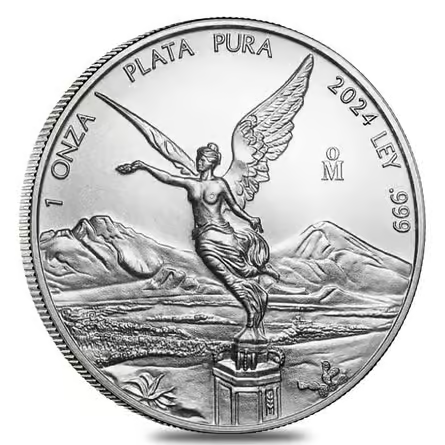 What is also propelling the price of silver higher and the gold:silver ratio lower is the increased interest in silver as a monetary metal. It was 60 years ago that silver was used as a common currency, a medium of exchange, as money in not just the United States, but in many countries around the world. While silver is no longer accepted as currency or legal tender in most of the world, that is changing rapidly in major economies such as China, India, and even the United States.
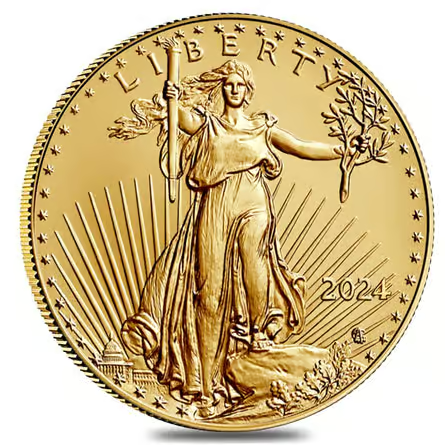 Making the Case for Gold and Silver
 Here's where Bitcoin, Gold, Silver, and the Major Stock Indices stood at the end of September:
While the returns for 2024 have been impressive, most individuals do not invest in or purchase precious metals for appreciation. Rather, many long-time holders of precious metals do so to protect themselves from catastrophic errors made by governments and/or central banks, such as inflation, currency devaluation, war, and sovereign defaults.
Perhaps the most provident reason to invest or save in gold and silver is its lack of counter-party risk. In other words, a holder of gold or silver has the asset unencumbered by liens, margins, lease, loan or service requirements. The asset is completely the property of the holder. With stocks or bonds, there's always another party on the other end. Stocks are subject to market conditions, the company's management, and the whims of brokers and dealers. Bonds or fixed-income assets are purchased from governments or corporate entities, and the risk of default is always present.
Disclaimer: Information disseminated on this site should not be construed as investment advice. Downtown Magazine Inc., Money Daily and it's owners, affiliates and/or employees are not investment advisors and do not offer specific investment advice. All investments have risk. You should consult a professional investment advisor or stock broker or use your individual judgement when making investment decisions. By viewing this site, you hold harmless Downtown Magazine Inc., Money Daily, its owners, affiliates and employees against any and all liability. Copyright 2025, Downtown Magazine Inc., all rights reserved.
|
|||
| search engine by freefind |
Your ad could be in the next issue of idleguy.com for as little as $6 per month. Contact Fearless Rick using the form on page 12 for more information.
Visit the IDLEGUY.COM MARKETPLACE for vintage magazines, Christmas Gifts for Guys and other holiday merchandise.
Got something to sell? Registration is free and there are no fees to sell on the marketplace.