Origins of Christmas and Holiday Traditions
Mid-winter had been deemed a time for celebration for centuries before the arrival of the man called Jesus. Early Europeans rejoiced at or near the winter solstice, when the worst of the winter was passing and they could look forward to extended hours of daylight.
The Scandinavian Norse celebrated Yule from the winter solstice well into January. In recognition of the return of the sun. Large logs would be set to fire lasting for days. Legend supposed that the longer the fire, the better the harvest and prospects for larger herds in the coming year.
Near the end of December, most cattle were slaughtered so they would not have to be fed during the winter, assuring a supply of fresh meat during the coldest part of the year. Wines and beers also were fully fermented and ready for drinking, prompting celebrations.
In Germany, the mythological Norse god Odin was a central focus of winter festivities in the belief that the highest god made nocturnal flights through the sky to observe his people, making determinations on their fates.
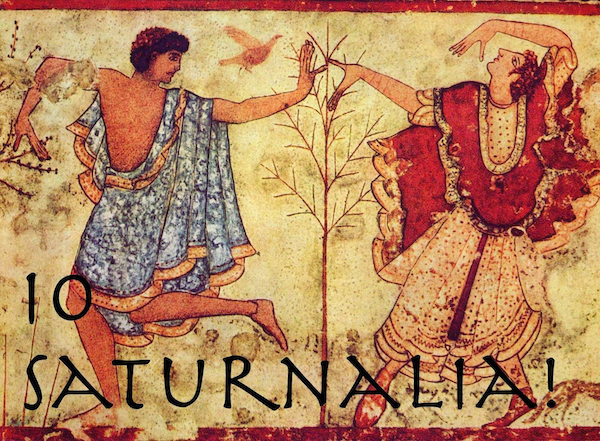
Winters, not as harsh as those in the far north, were celebrated by the Roman holiday of Saturnalia, in honor of Saturn, the god of agriculture. Beginning in the week prior to the winter solstice and continuing for a full month, Saturnalia’s festivities featured copious consumption of food and drink and a reversal of Roman social order. Enslaved people were given temporary freedom and treated as equals. Business and schools closed to allow full participation from the populace.
Many Romans also observed Juvenalia around the time of the winter solstice, a feast honoring the children of Rome. This celebration of the birthday of Mithra, the sun god, on December 25, in the belief that Mithra was an infant god, birthed from a rock, became one of the most sacred days of the year.
Christmas endured through the Middle Ages in Europe for millennia until religious reformers such as Oliver Cromwell outlawed the celebration in 1645. Puritans held sway in England through much of the 17th century until Charles II was restored to the throne reinstating the holiday.
After the American Revolution, English customs fell out of favor, including Christmas celebrations. Christmas wasn’t declared a federal holiday until June 26, 1870.
The early 1800s writings of Washington Irving in America and later, with the 1843 publication of Charles Dickens’ “A Christmas Carol”, Christmas traditions were fully restored in Europe and America, embracing the importance of family, good will, and respect for one another.
Over the next 100 years and into modern day, Americans built a unique Christmas tradition borrowed in part from many other customs, including decorating trees, sending holiday cards and gift-giving.
The legend of Santa Claus can be traced back to a monk named St. Nicholas, born in Turkey around A. D. 280. St. Nicholas gave away all of his inherited wealth and traveled the countryside helping the poor and sick, becoming known as the protector of children and sailors.
St. Nicholas first entered American popular culture in the late 18th century in New York, when Dutch families gathered to honor the anniversary of the death of “Sint Nikolaas” (Dutch for Saint Nicholas), or “Sinter Klaas” for short, evoking the moniker of “Santa Claus” over time.
In 1822, Episcopal minister Clement Clarke Moore wrote a Christmas poem called “An Account of a Visit from St. Nicholas,” more popularly known today by it’s first line: “‘Twas The Night Before Christmas.” The poem depicted Santa Claus as a jolly man who flies from home to home on a sled driven by reindeer to deliver toys.
The iconic version of Santa Claus as a jolly man in red with a white beard and a sack of toys was immortalized in 1881, when political cartoonist Thomas Nast drew on Moore's poem to create the image of Old Saint Nick we know today.
Evergreen fir trees have been universal winter decorations for many years. Pagans displayed the branches as a reminder that spring would come again. Romans placed them around temples to honor Saturn, the god of agriculture. But the first time the evergreen was used as a Christmas tree was either in Tallinn, Estonia or Riga, Latvia. Both cities lay claim as the true home of the first Christmas tree.
In the 16th century, German Christians brought the trees inside their homes as a symbol of everlasting life. When news spread that Queen Victoria had her German husband, Prince Albert, set up a Christmas tree in their palace, the practice quickly became the height of Christmas symbolism in England and America.
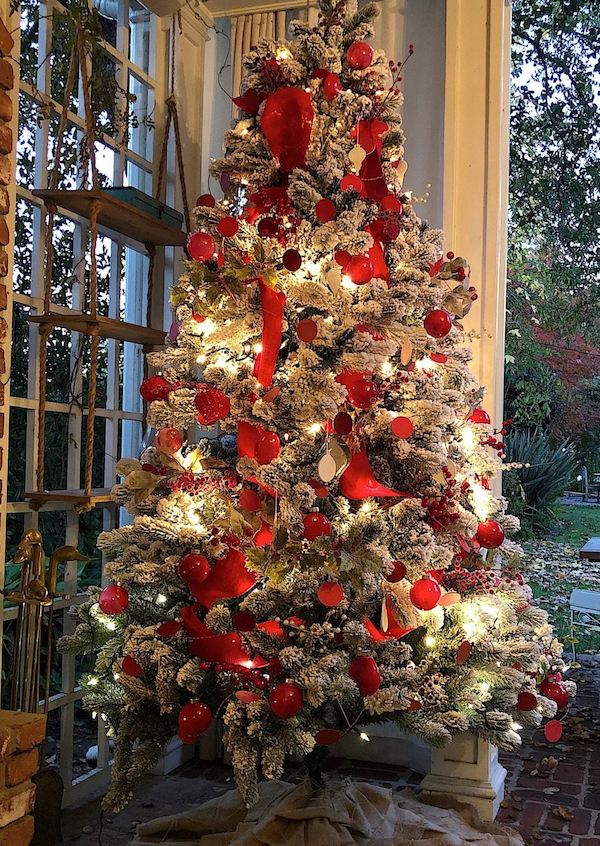
One of the most popular, if long and repetitive, Christmas carols is the countdown classic “The 12 Days of Christmas.” But the 12 days of Christmas are actually an integral part of the Christian tradition, being the 12 days between the birth of Jesus on December 25 and the Epiphany, January 6, when the three wise men, or magi, visited the baby Jesus and presented him with gifts. Shakespeare’s play, “Twelfth Night” is also associated with this period of celebration.
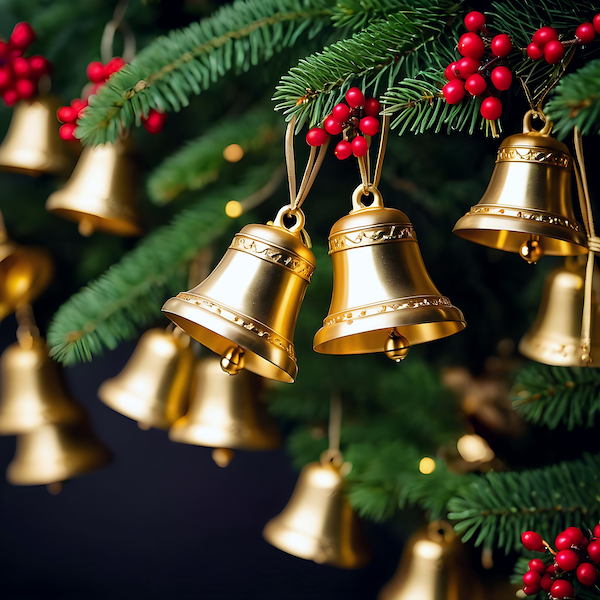
There’s no shortage of jangling sleigh bells, church bells, and jingle bells during the holiday season, owing from a history that is both symbolic and practical. in many pagan and also Christian traditions, bells have been associated with warding off evil spirits. Church bells are rung to signify important events, such as Christ’s birthday, or to alert churchgoers to services. The origin of jingle bells comes from their use on sleighs as a warning, since the hoofbeats of horses in the snow are muffled.
Christmas symbolism of wreaths dates back to ancient Greece and Rome, when victorious athletes wore leafy branches woven into a crown. The symbol of a never-ending circle made of evergreens also offered the promise of spring’s rebirth to pagans celebrating the winter solstice. Later, this Christmas symbol was adapted into Christian celebrations with the advent wreath, which is used to count down the weeks until the birth of Jesus.
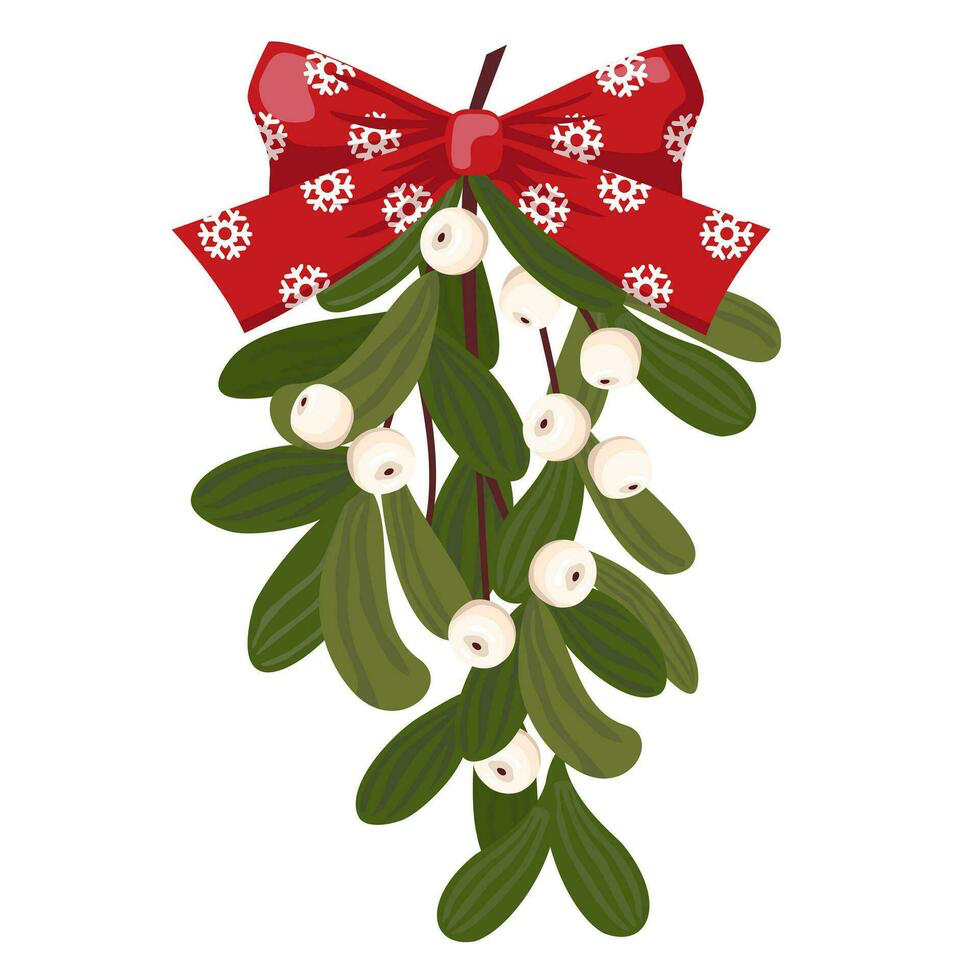
According to Norse legend, the gods used mistletoe to resurrect Odin’s son Baldur from the dead. So Baldur’s mother Frigg, the goddess of love, made the plant a symbol of love and vowed to kiss anyone who passed under it. The tradition has endured to the delight or horror of many who have passed beneath those hanging leaves.
This tradition goes back to the 16th century, where theologian Martin Luther is said to be the first person to put lights on a Christmas tree. Legend has it that he was walking through a forest one night and was moved by the beautiful stars shining through the trees. When he got home, he recreated what he saw for his family by putting a tree in their living room and placing lighted candles on its branches.
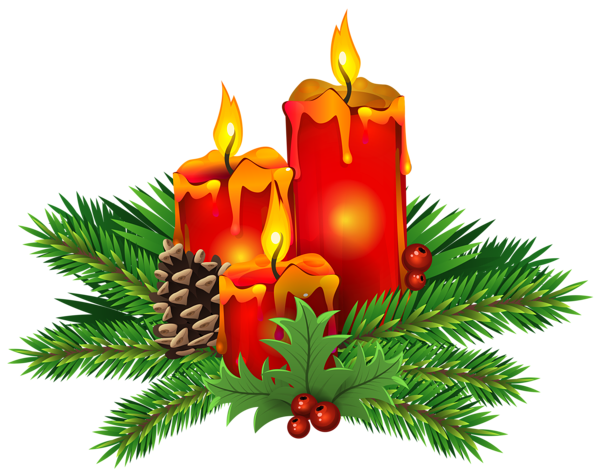
The symbolism of light during the holiday season is a universal one. During the darkest of days of the year, candles and fire represented hope, warmth and rebirth in winter solstice traditions around the world. These eventually merged with Christian traditions for Christmas. In Scandinavia, young girls wear wreaths on their heads lit with candles for St. Lucia Day on December 13. In New Mexico, luminarias, or candles in paper bags, light pathways at Christmas. A similar Mexican tradition, Las Posadas, has young people carrying candles to symbolically light the way for Mary and Joseph’s journey before Jesus’s birth. Advent wreaths also use candles to count down the four weeks before Christmas.
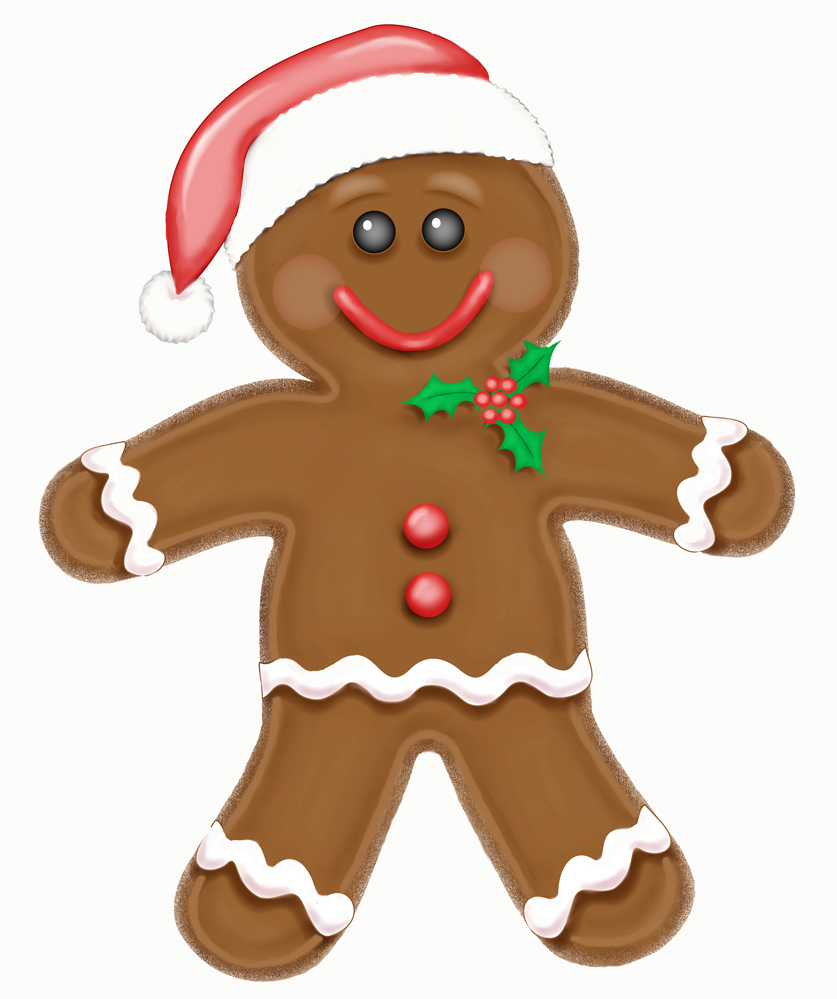
This specific Christmas cookie tradition features the warm, rich flavor of ginge, the spice that made its way to Europe from Asia on trade routes during the Middle Ages, developed into different versions of a spicy baked good called gingerbread. According to legend, Queen Elizabeth I of England was the first to make gingerbread into men, for the foreign dignitaries she would serve the dessert to at state dinners.
Eggnog has its roots in British aristocracy, who came up with the creamy concoction as a warm winter drink with added brandy and sherry to keep it from spoiling. Because the ingredients were so expensive, early colonists substituted the pricey liquors with rum, which was readily available from the Caribbean islands. At the time, rum was also called grog, so bartenders named the drink egg-n-grog, morphing eventually into the simplified, “eggnog.”
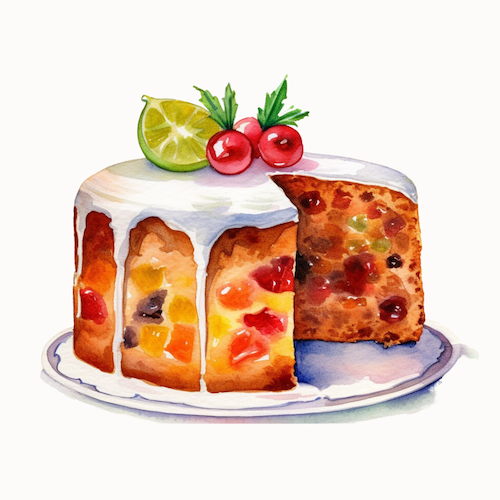
In Victorian times, fruitcakes were the height of indulgence during the Christmas season. Recipes used dried or preserved fruits and nuts from the fall season saved up for special occasions. But the cake’s roots go back much further, to Roman times, when a similar delicacy called satura was known to last for months without spoiling and was made from the nuts and fruits of the fall harvest.
A few brief - according to experts and legends - Christmas origins:
The first eggnog made in the United States was consumed in Captain John Smith’s 1607 Jamestown settlement.
Poinsettia plants are named after Joel R. Poinsett, an American minister to Mexico, who brought the red-and-green plant from Mexico to America in 1828.
The Salvation Army has been sending Santa Claus-clad donation collectors into the streets since the 1890s.
Rudolph, “the most famous reindeer of all,” was the product of Robert L. May’s imagination in 1939. The copywriter wrote a poem about the reindeer to help lure customers into the Montgomery Ward department store.
Construction workers started the Rockefeller Center Christmas tree tradition in 1931.
The World War I “Christmas Truce” was a series of widespread unofficial ceasefires mainly along the Western Front of the First World War around Christmas 1914.
In the week leading up to 25 December, French, German, and British soldiers crossed trenches to exchange seasonal greetings and converse. In some areas, men from both sides ventured into no man's land on Christmas Eve and Christmas Day to mingle and exchange food and souvenirs. There were joint burial ceremonies and prisoner swaps, while several meetings ended in carolling. Hostilities continued in some sectors, while in others the sides settled on little more than arrangements to recover bodies.
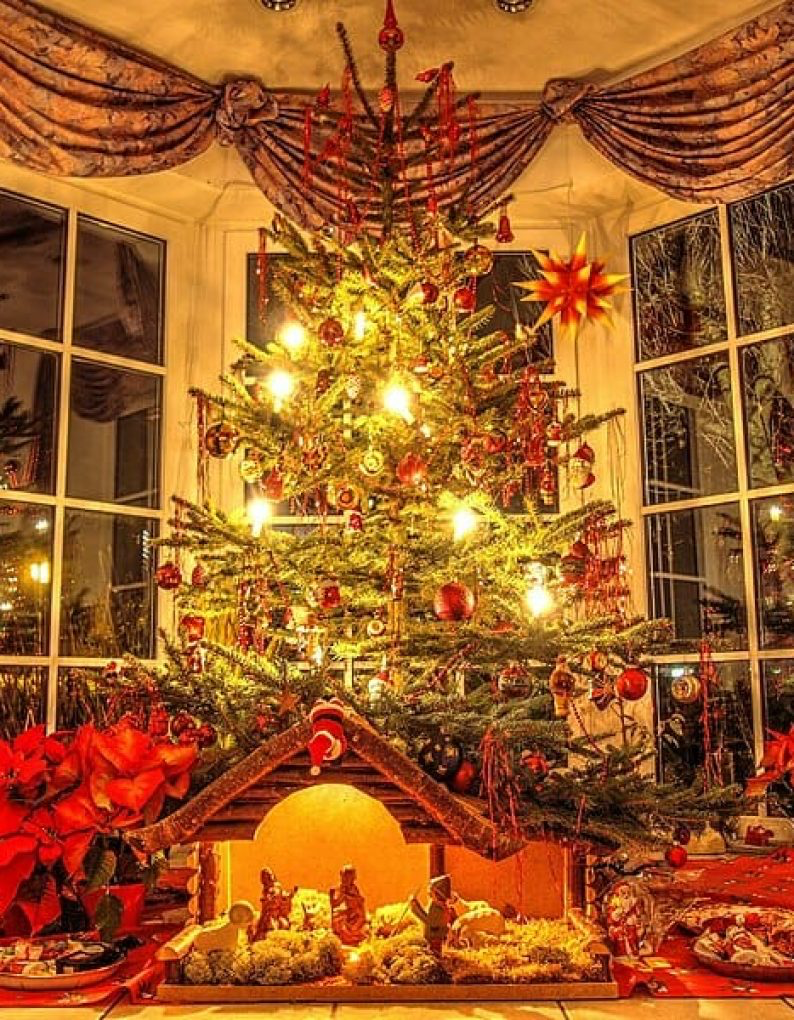 Christmas is celebrated on December 25 and is both a sacred religious holiday and a worldwide cultural and commercial phenomenon. For two millennia, people around the world have been observing it with traditions and practices that are both religious and secular in nature. Christians celebrate Christmas Day as the anniversary of the birth of Jesus of Nazareth, a spiritual leader whose teachings form the basis of their religion. Popular customs include exchanging gifts, decorating Christmas trees, attending church, sharing meals with family and friends and, of course, waiting for Santa Claus to arrive. Christmas Day, December 25, has been a federal holiday in the United States since 1870.
Saturnalia and Christmas
Christmas in Europe and America
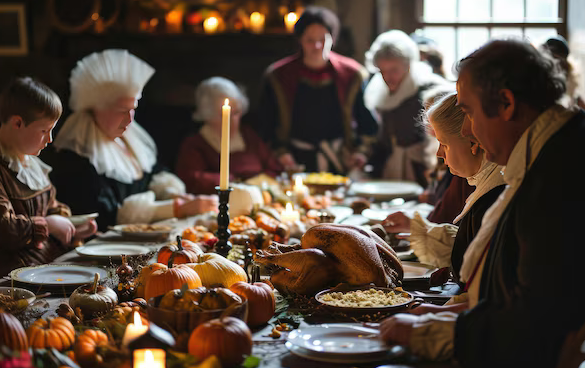 The pilgrims, English separatists that came to America in 1620, brought along the strict orthodoxy of their Puritan beliefs. Thus, Christmas was not a holiday in early America. From 1659 to 1681, the celebration of Christmas was actually outlawed in Boston. Anyone exhibiting Christmas revelry was fined five shillings. By contrast, in the Jamestown settlement, Captain John Smith reported that Christmas was enjoyed by all and passed without incident.
Who Invented Santa Claus?

Christmas trees
The 12 days of Christmas
Bells
Wreaths

Mistletoe
Christmas tree lights
Candles
Gingerbread Men
Eggnog
Fruitcake
|
|||
| search engine by freefind |
Your ad could be in the next issue of idleguy.com for as little as $6 per month. Contact Fearless Rick using the form on page 12 for more information.
Visit the IDLEGUY.COM MARKETPLACE for vintage magazines, Christmas Gifts for Guys and other holiday merchandise.
Got something to sell? Registration is free and there are no fees to sell on the marketplace.