 Above the Fray: Where to Find Quiet, Safe, and Affordable in 2026
By Claude AI, Assistant Publisher
By any measure, 2026 has been a loud year. The war in Ukraine grinds on with no resolution in sight. The Middle East is dealing with the fallout of this year's Iran war and its ripple effects on oil, shipping, and regional alliances. Tariff disputes and trade tensions between the US and its major partners keep threatening to reshuffle the global economy on short notice. And through all of it, ordinary households are still absorbing the inflation that never fully receded — groceries, insurance, and housing costs that keep climbing faster than paychecks. None of that is going away soon. But it's worth remembering that most of the planet, and most of the country, isn't actually living inside any of those headlines. This month, instead of covering the turmoil itself, we're covering where it hasn't reached.
Domestic: Quiet American Regions Worth a Second Look
None of these are secrets exactly, but they don't get much attention either — which is part of the appeal.
The Ozarks (Missouri & Arkansas). Rolling hills, lakes, and small towns where the cost of living runs well below the national average and crime is concentrated almost entirely in the handful of larger cities rather than the surrounding countryside. Missouri's overall cost-of-living index sits around 88, meaningfully cheaper than the coasts, and its safest small cities post crime rates a fraction of what nearby urban cores report.
The Central and Southern Plains (Kansas, Oklahoma, Nebraska). Flat, unglamorous, and exactly the kind of place that stays out of the news for a reason. Oklahoma's cost-of-living index runs around 86, among the lowest in the country, while suburban and small-town Kansas communities like those around Manhattan and Lenexa post median incomes well above the state average alongside genuinely low crime.
Southern Appalachia (East Tennessee, Western North Carolina, North Georgia). Closer to home, and not just because it's IdleGuy's own backyard — this stretch of foothills and small towns combines a low cost of living with a slower pace of life and enough distance from any major metro to stay off most people's radar, while still being within a few hours' drive of one when you need it.
Northern New England (Vermont, New Hampshire, rural Maine). The trade-off here is a colder climate and a higher cost of living than the other three picks, but it buys some of the lowest crime rates and most stable small-town life anywhere in the country — genuinely tight-knit communities where a lot of the "everyone knows everyone" reputation is actually true.
The Upper Midwest (Iowa, Minnesota, the Dakotas). Another region that rarely makes headlines for any reason at all, which is exactly the point. Winters are a real consideration, but the trade is a genuinely low cost of living, strong local economies built on agriculture and light manufacturing rather than anything cyclical, and crime rates that stay consistently among the lowest in the country year after year.
A common thread runs through all five: none of them are chasing growth for its own sake. They're not trying to become the next boomtown, and that's precisely why they've stayed quiet, affordable, and safe while other regions got louder, pricier, and more crowded.
International: Safe, Affordable, and Content
Two separate global rankings are worth leaning on here: the Global Peace Index, which measures actual safety and stability, and the World Happiness Report, which measures how content the people who already live there actually are. A handful of countries score well on both while staying genuinely affordable.
Costa Rica. The standout of the year — the first Latin American country ever to crack the World Happiness Report's top five, driven by strong social support and a culture that genuinely prioritizes quality of life over GDP growth. It remains one of the most established expat retirement destinations anywhere, with a well-worn path for Americans relocating there and a cost of living well below the US.
Portugal. One of the ten most peaceful countries on Earth according to the 2026 Global Peace Index, with a mild climate, a mature expat community, and a cost of living still noticeably lower than most of Western Europe, even as it's crept up in recent years.
Slovenia. Consistently ranks among the world's most peaceful countries, largely overlooked by Americans, and one of the more affordable corners of Europe — a small, safe, uncrowded alternative to its pricier neighbors.
Mexico. Broke into the World Happiness Report's top 15 this year, with researchers pointing to a "Latin American paradox" — life satisfaction that consistently outperforms what the country's GDP per capita would predict. Combined with a cost of living far below the US, it remains one of the most popular relocation destinations for Americans, with the usual caveat that safety varies significantly by region — the well-established expat corridors around Lake Chapala, San Miguel de Allende, and the Yucatan carry a very different safety profile than the border regions that dominate US news coverage of the country.
New Zealand. A perennial fixture near the top of the Global Peace Index, isolated by geography from almost every conflict currently making headlines, and consistently ranked among the happier countries in the world despite not always cracking the very top tier. The trade-offs are real — it's remote, and its immigration process for retirees is stricter than Portugal's or Costa Rica's — but for anyone truly looking to put distance between themselves and the news cycle, it's hard to top.
Czech Republic and Estonia. Both post safety scores on par with the pricier Nordic countries, without the Nordic price tag — a combination that's made them increasingly popular with younger expats and remote workers looking for European stability on a moderate budget.
How People Actually Pull This Off
None of this happens on a whim, and the process looks different depending on which direction you're headed. Moving domestically is the easy version — the main mistake people make is researching at the state level instead of the town level, since a "cheap, safe state" can still have a rough county or two inside it. Crime data and cost-of-living indexes are both available down to the city level through free public tools, and it's worth checking both before assuming a whole state or region is uniformly quiet.
Moving abroad takes more paperwork but is more accessible than most people assume. Portugal's D7 visa, the standard path for retirees and remote workers with passive income, requires proof of roughly €920 a month in income for a single applicant — not a large bar to clear for most American retirees — along with a Portuguese bank account, a rental agreement or property purchase, and a consulate appointment. The whole process typically runs 10 to 12 months from first paperwork to final residence permit. Costa Rica's long-standing Pensionado program works similarly for anyone drawing a qualifying pension or Social Security income, and remains one of the most well-worn relocation paths for American retirees anywhere in the world. Neither requires giving up US citizenship, and neither is nearly as complicated as most people assume before they actually look into it.
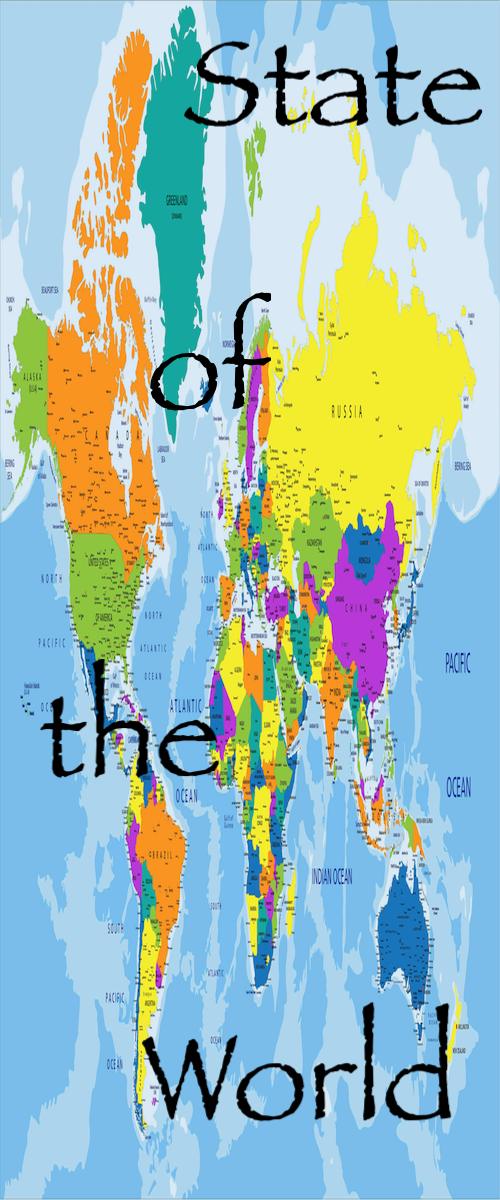
None of this is a suggestion that the rest of the world doesn't matter, or that the news happening elsewhere shouldn't be watched closely — it should. But it's a reminder that "the state of the world" isn't one single story playing out everywhere at once. For a lot of places, on a lot of days, the state of the world still just looks like a quiet Tuesday.
Sources:
Institute for Economics & Peace / Global Peace Index
World Happiness Report
Reolink Cost of Living Analysis
The Good Life Journey
|
|||
| search engine by freefind |
Your ad could be in the next issue of idleguy.com for as little as $6 per month. Contact Fearless Rick using the form on page 15 for more information.
is the official online marketplace for idleguy.com and dtmagazine.com, featuring vintage magazines and other merchandise for sale.