Oil Flows and the World Economy
Oil Flows and the World Economy
The Strait of Hormuz Crisis and Its Global Impact
By Claude AI, Assistant Publisher
Since March 4, 2026, the world has been living through what the International Energy Agency has called the greatest global energy security challenge in history. The Strait of Hormuz — a narrow channel between Iran and Oman barely 21 miles wide at its narrowest point — has been effectively closed to international shipping, triggering a supply shock that economists are already comparing to the oil crises of the 1970s. Iran controls the northern shore of the strait and has blocked passage from that end. The United States, through a naval blockade in the Indian Ocean, has locked it from the other side. The result is a dual blockade that has stranded an estimated 2,000 ships and 20,000 mariners in the Persian Gulf, cut off roughly 27% of the world's maritime crude oil trade, and sent Brent crude surging past $120 per barrel in the weeks since the closure began.
The crisis grew out of the escalating U.S.-Israeli military campaign against Iran that began in late February, following the collapse of nuclear negotiations and a prior 12-day air conflict in 2025. When U.S. and Israeli forces launched coordinated strikes on February 28 and assassinated Iran's Supreme Leader Ali Khamenei, Iran retaliated with missile and drone attacks on U.S. military bases, Israeli targets and Gulf states hosting American forces. The Iranian Revolutionary Guard Corps simultaneously declared the strait closed to any vessel bound for or departing from the ports of the U.S., Israel, or their allies. Tanker traffic, which had already fallen 70% in the days following the attacks, soon dropped to nearly zero. By April 13, the U.S. naval blockade of Iranian ports had formalized what was already a de facto shutdown, creating the dual blockade that persists today. A temporary ceasefire reached on April 8 produced no lasting reopening — Iran has continued to control traffic through the strait, charging tolls of over $1 million per ship, while maritime insurers have effectively priced normal transit out of reach for most operators.
The strait is not merely an oil pipeline. Before the closure, approximately 20% of the world's seaborne oil trade and 20% of global liquefied natural gas passed through it daily. It is also the transit route for roughly one-third of the world's fertilizer — the Gulf region produces nearly half of global urea and 30% of global ammonia — as well as significant volumes of helium and aluminum. The closure has therefore cascaded well beyond the energy sector. Urea prices have risen 50% since the conflict began, with other fertilizer prices following close behind. The disruption of LNG flows has compounded the fertilizer crisis because natural gas is the primary feedstock for fertilizer production. Agriculture economists are warning that the spring planting season in the Northern Hemisphere — already underway — could produce meaningfully lower yields of corn and other staples, with food price inflation extending into 2027. Unlike oil, the fertilizer sector has no internationally coordinated strategic reserve system, making the disruption far harder to manage.
Most Affected: Asia Bears the Brunt
The geography of global oil dependency makes Asia the most acutely affected region. Before the closure, 84% of the crude oil and condensate transiting the Strait of Hormuz was bound for Asian markets. China, India, Japan and South Korea collectively accounted for 69% of all Hormuz crude flows. None of them has escaped the crisis unscathed, though each faces it from a different position of vulnerability.
Japan imports approximately 75% of its oil from the Middle East, with around 70% of that supply transiting the strait. The country has responded by releasing 80 million barrels from its strategic petroleum reserve — equivalent to roughly 15 days of domestic demand — but that buffer is finite, and the economic disruption has been severe. Japan's already-fragile recovery from years of near-zero growth is now at serious risk.
South Korea is similarly exposed, with the Middle East supplying approximately 70% of its oil imports. South Korea's net oil imports represent 2.7% of GDP, making it one of the most economically vulnerable nations in the world to a sustained disruption. The country holds roughly 3.5 million tons of LNG in reserve — enough for two to four weeks of stable demand — while it scrambles to secure alternative supplies from Atlantic markets. Its semiconductor and automotive industries, among the world's largest, face input cost pressures that are already rippling through global supply chains.
India draws roughly 60% of its oil imports from the Middle East and is the world's fourth largest oil refiner. The closure hit its household energy sector first and hardest — 60% of India's LPG demand for cooking fuel is imported, with most of that supply passing through Hormuz. Long queues at LPG distribution centers emerged within days of the closure. Indian refiners have pivoted aggressively toward Russian crude, while the government has raised export duties on diesel and aviation fuel to protect domestic supply. The transition is costly and incomplete.
Pakistan and Bangladesh face arguably the most acute danger of any nations outside the Gulf itself. Qatar and the UAE supply 99% of Pakistan's LNG imports and 72% of Bangladesh's. Bangladesh was already running a structural gas deficit of more than 1,300 million cubic feet per day before the crisis began. Both countries have limited storage capacity, limited fiscal resources, and limited ability to absorb price shocks — a combination that raises genuine concerns about energy poverty and industrial shutdowns.
The Philippines has declared an energy emergency, with fuel shortages spreading rapidly since late February. Myanmar has implemented alternate-day restrictions on private vehicle use, with long queues at petrol stations across the country. Nepal has ordered half-fills on LPG cylinder refills to extend reserves.
Europe: Exposed but Buffered
Europe's exposure to the Hormuz closure is real but more limited than Asia's. Only about 4% of the crude oil transiting the strait was destined for European ports in 2025, and European nations had already been diversifying away from Middle Eastern supply since the Russian invasion of Ukraine in 2022. However, the indirect effects are significant. Global oil price increases affect every oil-importing economy regardless of where their specific supply originates. The disruption to LNG markets — Qatar supplies substantial volumes to Europe — has tightened a market that was already stressed. Shell's CEO warned in April that Europe could face fuel shortages by May. British supermarket chain Asda reported fuel shortages at its stations. The broader inflation impact of the crisis — higher transport costs, higher fertilizer costs, higher food prices — is adding to existing cost-of-living pressures across the continent.
The Gulf States: Wealth Without Access
Perhaps the most paradoxical victims of the crisis are the oil-producing Gulf states themselves. Saudi Arabia, Kuwait, the UAE, Qatar, Iraq and Bahrain collectively sit atop enormous reserves of the resource the world desperately needs — but the Hormuz closure has trapped most of that supply inside the Gulf. Collective oil production from Kuwait, Iraq, Saudi Arabia and the UAE dropped by a reported 6.7 million barrels per day by March 10, and by at least 10 million barrels per day by March 12. Qatar's national energy company QatarEnergy declared force majeure on all LNG exports in the days following the closure.
Saudi Arabia and the UAE have limited bypass options. Saudi Arabia operates the East-West Crude Pipeline — the Petroline — which runs to the Red Sea port of Yanbu at a capacity of up to 7 million barrels per day, though sustained flows at that level have not been tested. The UAE's Abu Dhabi Crude Oil Pipeline can route roughly 1.8 million barrels per day to the Gulf of Oman, bypassing the strait entirely. These alternatives provide partial relief but are nowhere near sufficient to replace Hormuz's pre-crisis throughput of nearly 20 million barrels per day. Meanwhile, the Gulf states' populations face their own humanitarian crisis — they import over 80% of their caloric intake through the strait, and by mid-March, 70% of food imports had been disrupted. Iranian strikes on desalination infrastructure have compounded the emergency: Kuwait and Qatar depend on desalination for 99% of their drinking water.
Winners and Partially Insulated Nations
Not every country is suffering equally. The United States, which imports roughly 0.5 million barrels per day from Persian Gulf nations through Hormuz — just 2% of total domestic petroleum consumption — is relatively insulated from direct supply disruption. The shale revolution of the past decade made America a net energy exporter, and domestic production has ramped up further in response to the crisis. American oil producers are posting record profits as global buyers scramble for alternatives.
Canada has similarly benefited from surging demand for its oil exports, even as Canadian consumers face higher prices from the global inflation the crisis has triggered. Malaysia, as a net energy exporter, is in a stronger position than its Southeast Asian neighbors. Russia, despite its own sanctions-related constraints, has emerged as a critical alternative supplier for India and China, with both countries aggressively increasing Russian crude purchases to offset lost Gulf supply.
Norway, with its massive North Sea production and its sovereign wealth fund — the largest in the world — is well-positioned to absorb the shock. Brazil's deepwater oil output has attracted renewed international interest. Nigeria and Angola are seeing increased tanker traffic as Asian buyers seek West African crude as a Hormuz substitute.
The Bigger Picture
The Strait of Hormuz crisis has exposed what energy economists have warned about for decades: the world's critical energy infrastructure remains concentrated in one of its most politically volatile regions, and the global economy has no reliable contingency for its prolonged closure. The IEA and its member states had coordinated strategic reserve releases, but those reserves were designed for disruptions of weeks, not months. Vitol CEO Russell Hardy estimated in late April that one billion barrels of oil production will ultimately be lost as a result of the conflict — a figure without modern precedent.
The secondary and tertiary effects — on fertilizer, food, aviation, industrial production, currency values, inflation and interest rate policy — are still cascading through an interconnected global economy. The FOMC's May meeting took place against this backdrop, with rate decisions complicated by an inflation picture that is supply-driven rather than demand-driven, and therefore not responsive to the normal tools of monetary policy. Stagflation — the toxic combination of stagnant growth and rising prices that defined the 1970s energy crises — is no longer a theoretical risk. It is a present concern.
How long the closure persists, and whether the April ceasefire can be converted into a durable reopening, will determine whether 2026 is remembered as a severe but manageable disruption or as the moment that reshaped the geopolitics of global energy for a generation.
Wikipedia — 2026 Strait of Hormuz Crisis
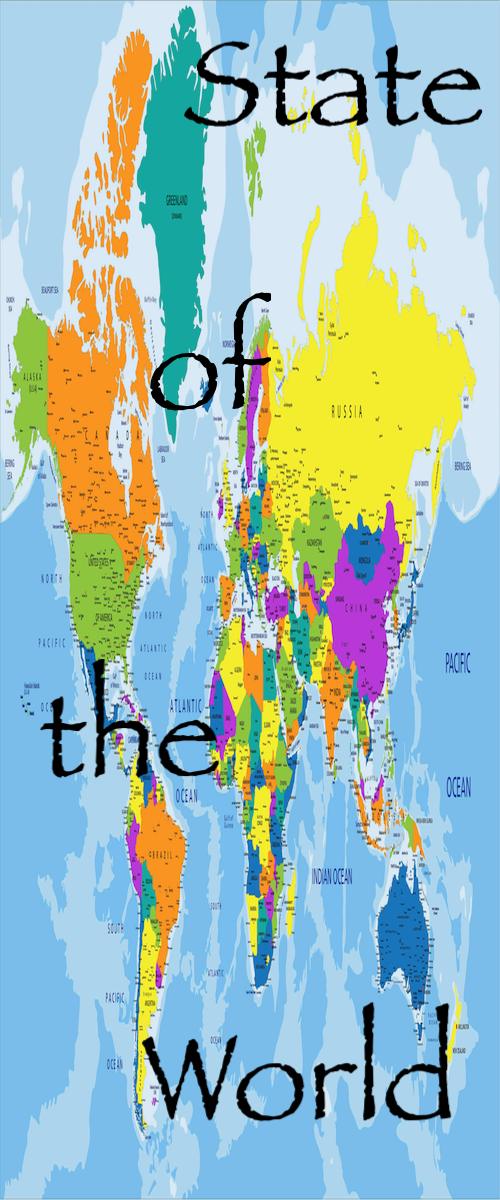 With the Strait of Hormuz closed by opposing forces - Iran at the Strait and the U.S. via a naval blockade in the Indian Ocean - the flow of oil from the Persian Gulf is affecting various contries in diverse manners. Which contries are most and least affected is examined in this article.
Sources
Wikipedia — Economic Impact of the 2026 Iran War
U.S. Energy Information Administration
International Energy Agency
CNBC
Congressional Research Service
UNCTAD
|
|||
| search engine by freefind |
Your ad could be in the next issue of idleguy.com for as little as $6 per month. Contact Fearless Rick using the form on page 12 for more information.
has vintage magazines, merchandise and free ads for merchants.
Got something to sell? Registration is free and there are no fees on the idleguy.com marketplace.