Economics, Austrian Style... and Thanksgiving Cooking
The IdleGuy.com librarian wanted to impart some economic knowledge this month while not forgetting that November is always about Thanksgiving and cooking up a holiday feast, so the selections reflected her (yes, she's a woman) taste in monetary matters and culinary delights.
The selection of seminal works by Ludwig von Mises and Friedrich A. Hayek are significant additions to the growing IdleGuy.com library and the publisher is proud to present them, unvarnished and without pretense.
In the foreword to Human Action: A Treatise on Economics, Mises explains complex market phenomena as “the outcomes of countless conscious, purposive actions, choices, and preferences of individuals, each of whom was trying as best as he or she could under the circumstances to attain various wants and ends and to avoid undesired consequences.” It is individual choices in response to personal subjective value judgments that ultimately determine market phenomena–supply and demand, prices, the pattern of production, and even profits and losses. Although governments may presume to set “prices,” it is individuals who, by their actions and choices through competitive bidding for money, products, and services, actually determine “prices”.
Thus, Mises presents economics–not as a study of material goods, services, and products -- but as a study of human actions. He sees the science of human action, praxeology, as a science of reason and logic, which recognizes a regularity in the sequence and interrelationships among market phenomena. Mises defends the methodology of praxeology against the criticisms of Marxists, socialists, positivists, and mathematical statisticians, and attributes the tremendous technological progress and the consequent increase in wealth and general welfare in the last two centuries to the introduction of liberal government policies based on free-market economic teachings, creating an economic and political environment which permits individuals to pursue their respective goals in freedom and peace.
Mises also explains the futility and counter-productiveness of government attempts to regulate, control, and equalize all people’s circumstances: “Men are born unequal and … it is precisely their inequality that generates social cooperation and civilization.”
Ludwig von Mises (1881-1973) was the leading spokesman of the Austrian School of Economics throughout most of the twentieth century. He earned his doctorate in law and economics from the University of Vienna in 1906. In 1926, Mises founded the Austrian Institute for Business Cycle Research. From 1909 to 1934, he was an economist for the Vienna Chamber of Commerce. Before the Anschluss, in 1934 Mises left for Geneva, where he was a professor at the Graduate Institute of International Studies until 1940, when he emigrated to New York City. From 1948 to 1969, he was a visiting professor at New York University. Bettina Bien Greaves is a former resident scholar, trustee, and longtime staff member of the Foundation for Economic Education. She has written and lectured extensively on topics of free market economics. Her articles have appeared in such journals as Human Events, Reason, and The Freeman: Ideas on Liberty. A student of Mises, Greaves has become an expert on his work in particular and that of the Austrian School of economics in general. She has translated several Mises monographs, compiled an annotated bibliography of his work, and edited collections of papers by Mises and other members of the Austrian School.
A classic work in political philosophy, intellectual and cultural history, and economics, The Road to Serfdom has inspired and infuriated politicians, scholars, and general readers for more than half a century. Originally published in England in the spring of 1944 -- when Eleanor Roosevelt supported the efforts of Stalin, and Albert Einstein subscribed lock, stock, and barrel to the socialist program -- The Road to Serfdom was seen as heretical for its passionate warning against the dangers of state control over the means of production.
For F. A. Hayek, the collectivist idea of empowering government with increasing economic control would inevitably lead not to a utopia but to the horrors of nazi Germany and fascist Italy. First published by the University of Chicago Press on September 18, 1944, The Road to Serfdom garnered immediate attention from the public, politicians, and scholars alike. The first printing of 2,000 copies was exhausted instantly, and within six months more than 30,000 were sold. In April of 1945, Reader’s Digest published a condensed version of the book, and soon thereafter the Book-of-the-Month Club distributed this condensation to more than 600,000 readers. A perennial best-seller, the book has sold over a quarter of a million copies in the United States, not including the British edition or the nearly twenty translations into such languages as German, French, Dutch, Swedish, and Japanese, and not to mention the many underground editions produced in Eastern Europe before the fall of the iron curtain.
After thirty-two printings in the United States, The Road to Serfdom has established itself alongside the works of Alexis de Tocqueville, John Stuart Mill, and George Orwell for its timeless meditation on the relation between individual liberty and government authority. This fiftieth anniversary edition, with a new introduction by Milton Friedman, commemorates the enduring influence of The Road to Serfdom on the ever-changing political and social climates of the twentieth century, from the rise of socialism after World War II to the Reagan and Thatcher and “revolutions" in the 1980s and the transitions in Eastern Europe from communism to capitalism in the 1990s.
F. A. Hayek (1899-1992), recipient of the Medal of Freedom in 1991 and co-winner of the Nobel Memorial Prize in Economics in 1974, was a pioneer in monetary theory and the principal proponent of libertarianism in the twentieth century. On the first American edition of The Road to Serfdom: and “One of the most important books of our generation... It restates for our time the issue between liberty and authority with the power and rigor of reasoning with which John Stuart Mill stated the issue for his own generation in his great essay On Liberty... It is an arresting call to all well-intentioned planners and socialists, to all those who are sincere democrats and liberals at heart to stop, look and listen. -- Henry Hazlitt, New York Times Book Review, September 1944.
“In the negative part of Professor Hayek’s thesis there is a great deal of truth. It cannot be said too often -- at any rate, it is not being said nearly often enough -- that collectivism is not inherently democratic, but, on the contrary, gives to a tyrannical minority such powers as the Spanish Inquisitors never dreamt of. -- George Orwell, Collected Essays
The book "365 Yummy Thanksgiving Recipes" will accompany with you in preparing the most delicious dishes.
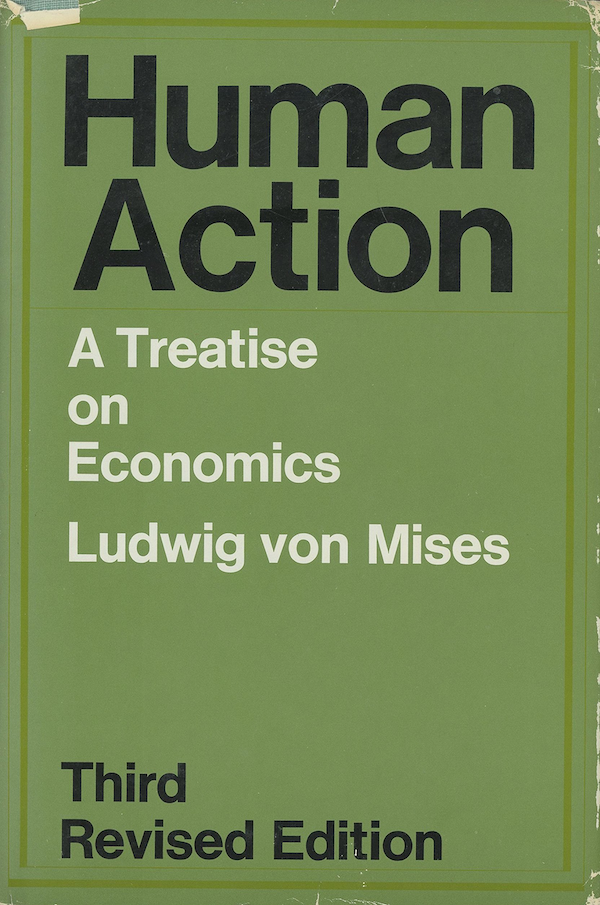 Human Action: A Treatise on Economics by Ludwig von Mises (1940)
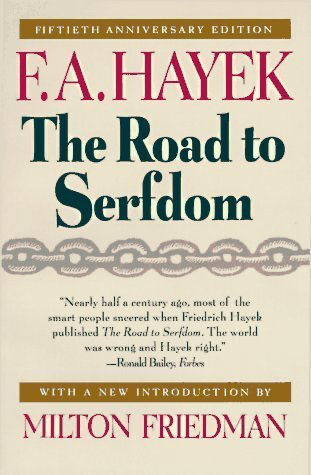 The Road to Serfdom by Friedrich A. Hayek (1944)
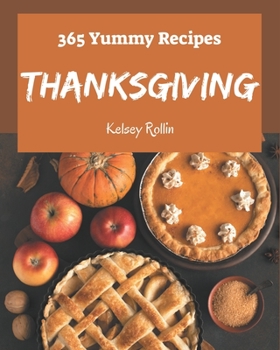 365 Yummy Thanksgiving Recipes: Happiness is When You Have a Yummy Thanksgiving Cookbook! by Kelsey Rollin (2020)
Chapter 1: Low-Calorie Thanksgiving Recipes
Chapter 2: Gluten-Free Thanksgiving Recipes
Chapter 3: Budget Thanksgiving Recipes
Chapter 4: Slow Cooker And Crockpot Thanksgiving Recipes
Chapter 5: Thanksgiving Breakfast Recipes
Chapter 6: Thanksgiving Drink Recipes
|
|||
| search engine by freefind |
Your ad could be in the next issue of idleguy.com for as little as $6 per month. Contact Fearless Rick using the form on page 15 for more information.
is the official online marketplace for idleguy.com and dtmagazine.com, featuring vintage magazines and other merchandise for sale.